
Four Days of Indigenous Art, Dance and Music in the Black Hills
From He Sapa Wacipi to Main Street Square, Indigenous Peoples’ Day weekend brings together artists, dancers, musicians and community events.
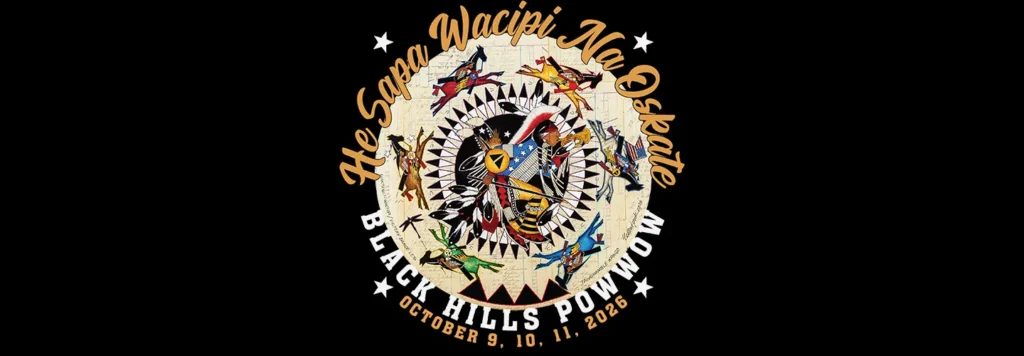
The 38th annual He Sapa Wacipi Na Oskate, or Black Hills Powwow, opens Friday at The Monument and runs through Sunday night. Saturday morning brings the Indigenous Peoples’ Day Parade through downtown Rapid City. A few hours later, The Journey Museum opens a new exhibition tracing more than four decades of the Dream Catchers Artists Guild. On Monday, Main Street Square fills with artists, musicians, speakers, vendors and a free concert for NDN Collective’s Indigenous Peoples’ Day gathering.
Across four days, Indigenous art in the Black Hills will take a lot of different forms.
Three Days at He Sapa Wacipi
The Black Hills Powwow begins Friday, Oct. 9, at Summit Arena at The Monument, continuing through Sunday, Oct. 11.
Now in its 38th year, He Sapa Wacipi Na Oskate brings championship singers and dancers from many nations to Rapid City. The Black Hills Powwow Association says this year’s total prize payout will exceed $200,000, the largest in the event’s history, including $59,000 in singing prizes.
Friday evening begins with a Veterans Grand Entry at 6 p.m., followed by the Dancer Grand Entry at 7. Dance contests continue into the night, alongside the Arts and Info Tradeshow and an 8 p.m. fashion show in Rushmore Hall.
Saturday starts outside the arena.
The Indigenous Peoples’ Day Parade lines up downtown before stepping off from Second and Main streets at 10 a.m. This year’s theme is “We Dance for the People.”
Back at The Monument, Saturday’s schedule includes Veterans Grand Entries, intertribal dancing and competition throughout the afternoon and evening. Sunday continues with dancing, singing and contest finals before the 2026 Black Hills Powwow champions are announced.
The powwow’s longtime invitation is a simple one: “Come Dance With Us.”
A Lakota Art Collective Returns to the Center of the Story
Saturday afternoon offers another look at Indigenous art in Rapid City, this time through artists whose work stretches back decades.
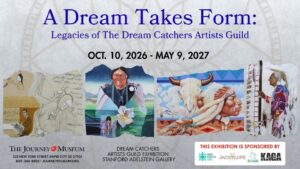
The Journey Museum opens A Dream Takes Form: Legacies of the Dream Catchers Artists Guild with a free reception from 1 to 3 p.m. Curator Keith BraveHeart will be joined by Guild members Roger Broer, Donald Montileaux and Arthur Amiotte.
The Dream Catchers Artists Guild was founded in 1983 by Oglala Lakota artists Vic Runnels, Donald Ruleaux and Richard Red Owl. Its members eventually included Amiotte, R.G. Bowker, Broer, Robert Freeman, Montileaux and Bobby Penn.
The group worked to strengthen Lakota art, create professional opportunities for Native artists and encourage younger generations of artists. In 1987, the Guild held its first collective exhibition at the Sioux Indian Museum in Rapid City.
A Dream Takes Form pulls work from the Sioux Indian Museum collection and other South Dakota museums, following the artists from the 1960s through the present with particular attention to the years when the Guild formed.
The exhibition also happens alongside Woihanblapi at the Dahl Arts Center, another exhibition centered on work by Dream Catchers Artists Guild members. Together, the shows put the work of a group founded more than 40 years ago back into galleries in the city where the artists first exhibited together.
Monday Moves Downtown
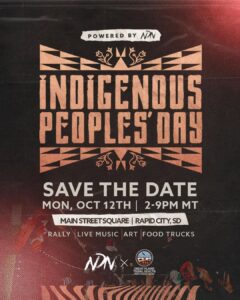
On Monday, Oct. 12, NDN Collective takes over Main Street Square from 2 to 9 p.m. for its 2026 Indigenous Peoples’ Day gathering.
The afternoon begins with a rally and continues with Indigenous and local food vendors, shops and interactive booths before closing with a free concert.
The musical lineup includes Welby June, Santee Witt, Tiana Spotted Thunder, Isaac Tonasket, MIRACLE, Nevad Brave and The Bearhead Sisters. Robert Bordeaux will perform spoken word, DJ AIM! will DJ, and Cante Heart and Dean LaPointe will serve as emcees. Macklemore is scheduled for a special guest performance and is also listed among the rally speakers.
NDN Collective describes the gathering as a celebration of Indigenous people “from the He Sapa to Palestine,” while also placing the event within its work around land, resistance and Indigenous organizing. Rally speakers include NDN Collective founder and CEO Nick Tilsen, Black Hills Clean Water Alliance organizer Duane Two Bulls, former Miss He Sapa Wiŋ Tyler Star Comes Out, Marilyn Allen and Eva Cardenas of the LANDBACK Action Network.
For BHAB, the music lineup alone stretches well beyond one genre or one definition of what Indigenous music is supposed to sound like. Traditional voices, contemporary songwriting, hip-hop, spoken word and DJ culture all share the same downtown stage.
Indigenous Peoples’ Day and Native Americans’ Day
The holiday has two names in use locally.
South Dakota law officially designates the second Monday in October as Native Americans’ Day, a legal state holiday established in 1990. State law dedicates the day to the remembrance of Native American leaders who contributed to South Dakota’s history.
Many Rapid City organizations and events, including NDN Collective and Saturday’s downtown parade, use Indigenous Peoples’ Day.
Crazy Horse Memorial continues the state’s Native Americans’ Day tradition Monday with a program beginning at 10 a.m. The schedule includes guest speakers and singers, a free buffalo stew lunch beginning at 11 a.m. and Indigenous artist-led craft workshops through 3 p.m.
The Memorial traces its observance back to 1990, when Gov. George S. Mickelson called for the first Native Americans’ Day celebration there during South Dakota’s “Year of Reconciliation.”