Category: On Our Radar

On Our Radar is our editorial watchlist. These are the shows, exhibits, performances, and events that have caught our attention for one reason or another. Sometimes it’s the lineup. Sometimes it’s the venue. Sometimes it’s just a feeling that something special is about to happen. This is where we highlight what we’re excited about and why we think it’s worth your time.

  • Nu-Blu Brings 20 Years of Bluegrass to Rapid City

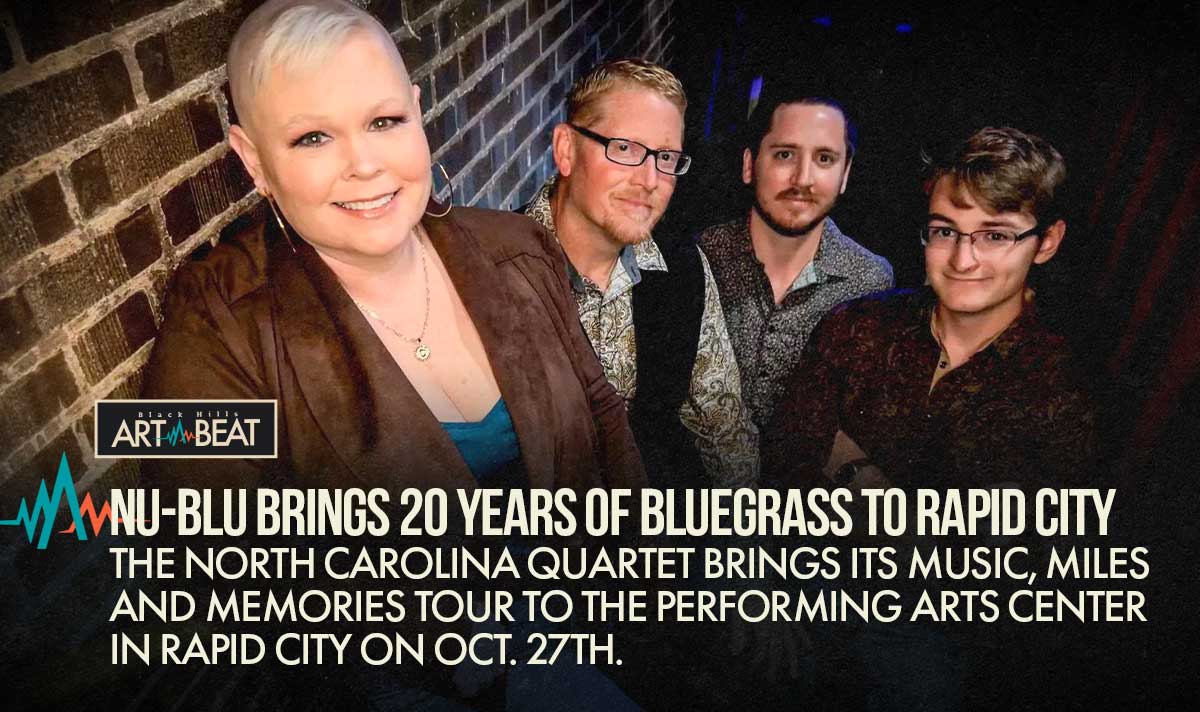
    Nu-Blu Brings 20 Years of Bluegrass to Rapid City

    Nu-Blu has spent more than two decades on the road, and the North Carolina bluegrass band will bring that long-running catalog to Rapid City Tuesday, Oct. 27.

    The quartet performs at 7 p.m. in the Historic Theater at the Performing Arts Center of Rapid City as part of the Rapid City Concert Association’s 90th season. Doors open at 6:30 p.m.

    Formed in 2003, Nu-Blu is built around husband-and-wife duo Carolyn and Daniel Routh. Carolyn handles lead vocals and bass, while Daniel plays guitar and sings. Austin Hefflefinger adds banjo, guitar and vocals, with Justin Harrison on mandolin, fiddle and percussion.

    Over the years, the band has developed a sound that sits between traditional bluegrass and contemporary Americana, pairing acoustic picking with songs that lean heavily on storytelling.

    Their most recent album, Where You’ve Been, was released in 2024 as Nu-Blu marked roughly 20 years together. The record looks back at choices, relationships and the stretches of life that accumulate over time, while bringing in a few notable guests along the way.

    Ricky Skaggs and Sharon White appear on “The Will,” a song about a family gathering to hear a farmer’s last wishes. The accompanying video earned Nu-Blu a 2025 Josie Award for Music Video of the Year in the performance-focused duo/group category.

    Elsewhere on the album, Jim Peterik, known for his work with Survivor and as a co-writer of “Eye of the Tiger,” joins the band on “Trains,” while Jody McBrayer appears on “Jesus Loves You.”

    Those collaborations are part of a longer pattern for Nu-Blu. The group previously worked with Sam Moore of Sam & Dave on “Jesus and Jones,” their tribute to George Jones, and has released five albums that reached the Billboard Top 10 in bluegrass.

    The Rapid City appearance comes during another extended stretch of touring for the band, with dates across the Upper Midwest this fall.

    For the Historic Theater show, audiences can expect a mix of Nu-Blu originals alongside the band’s bluegrass treatments of familiar songs. Material promoted for the current program includes Hank Williams’ “You Win Again,” Bob Dylan’s “Knockin’ on Heaven’s Door” and John Prine’s “Angel From Montgomery.”

  • Black Hills Symphony Opens Its 94th Season With Danse Macabre

    Black Hills Symphony Opens Its 94th Season With Danse Macabre

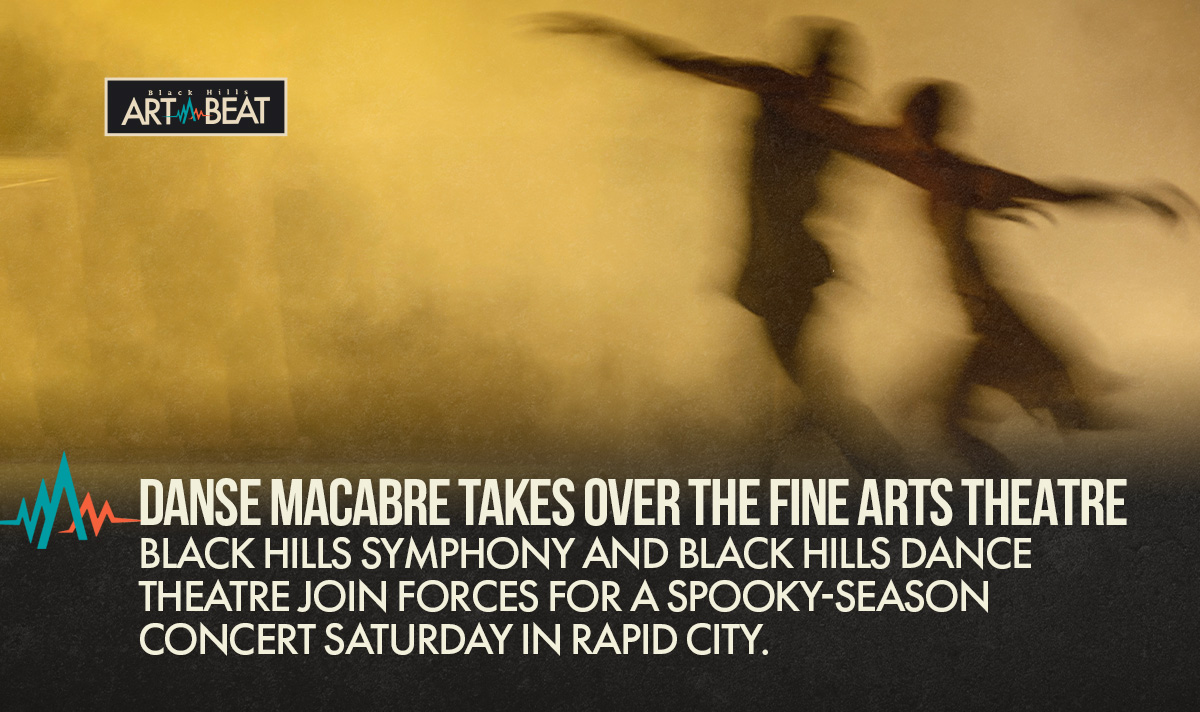
    Danse Macabre brings the orchestra together with Black Hills Dance Theatre for an evening of Halloween-inspired orchestral music, film music and dance at the Fine Arts Theatre on Saturday, Oct. 17.

    The concert begins at 7:30 p.m.

    The Symphony has described the program as a mix of haunting symphonic works and music from iconic films, with Thriller among the pieces planned for the evening. Black Hills Dance Theatre joins the orchestra for the performance, putting dancers onstage alongside the live music.

    It is a sizable local collaboration. South Dakota News Watch reports that the concert will include roughly 50 musicians and about 70 dancers from area studios.

    A Halloween Opening for the Symphony

    Danse Macabre also marks the beginning of the Black Hills Symphony Orchestra’s 2026–27 season.

    Now in its 94th season, the Black Hills Symphony Orchestra continues under the direction of artistic director and conductor Bruce Knowles.

    Rather than begin its 94th season with a traditional classical program, the Symphony is leaning directly into the calendar.

    The title comes from Danse macabre, or “Dance of Death,” a long-running artistic idea depicting the living and dead dancing together. It also shares its name with Camille Saint-Saëns’ famous 1874 orchestral work, one of classical music’s best-known pieces of spooky-season repertoire.

    For Saturday’s performance, that Halloween atmosphere expands beyond the orchestra pit. Dance gives the music a physical component, while the program moves between symphonic works and recognizable music from film and popular culture.

    The result should look considerably different from a standard night at the symphony.

    Black Hills Symphony’s 94th Season

    Saturday is the first of five concerts currently listed for the Symphony’s 2026–27 season.

    The season continues Dec. 5 with A Night Before Christmas, featuring cellist Jolyon Pegis; Disco Inferno on New Year’s Eve; Cupid’s Bow on Feb. 13; and an April 10 season finale featuring Rapid City native and violinist Maya Anjali Buchanan in 4 Seasons Reimagined.

  • Indigenous Peoples’ Day Weekend Fills the Black Hills With Art, Dance and Music

    Indigenous Peoples’ Day Weekend Fills the Black Hills With Art, Dance and Music

    Four Days of Indigenous Art, Dance and Music in the Black Hills

    From He Sapa Wacipi to Main Street Square, Indigenous Peoples’ Day weekend brings together artists, dancers, musicians and community events.


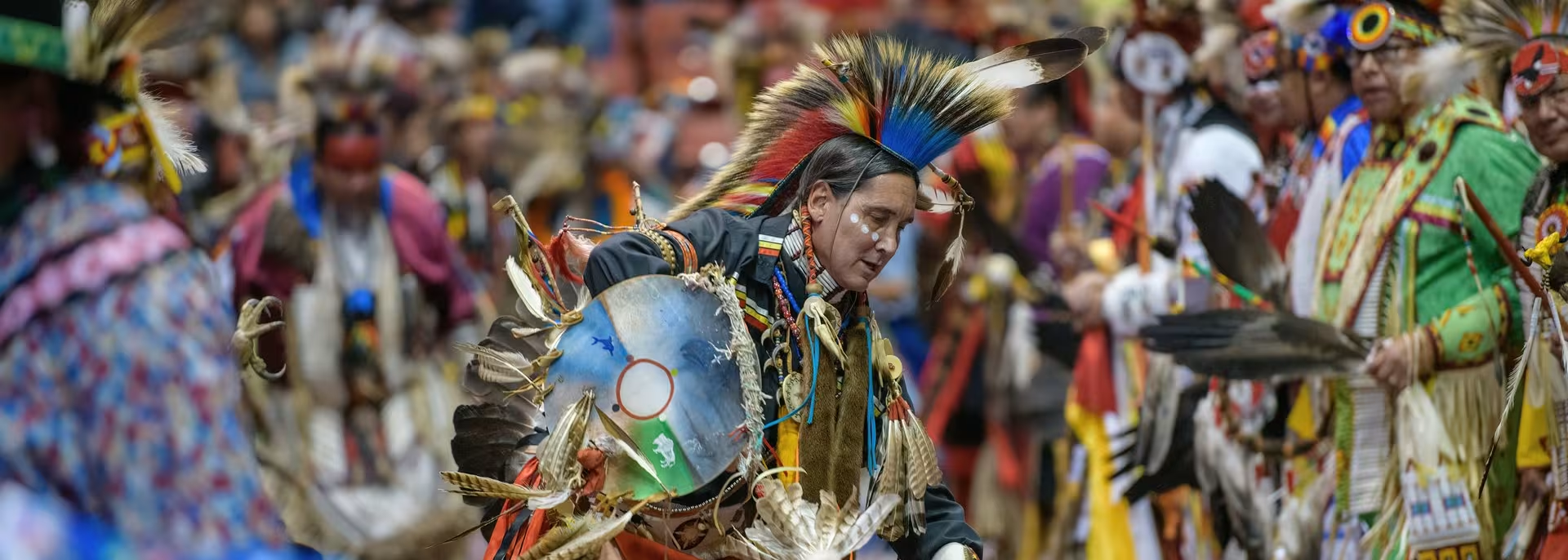
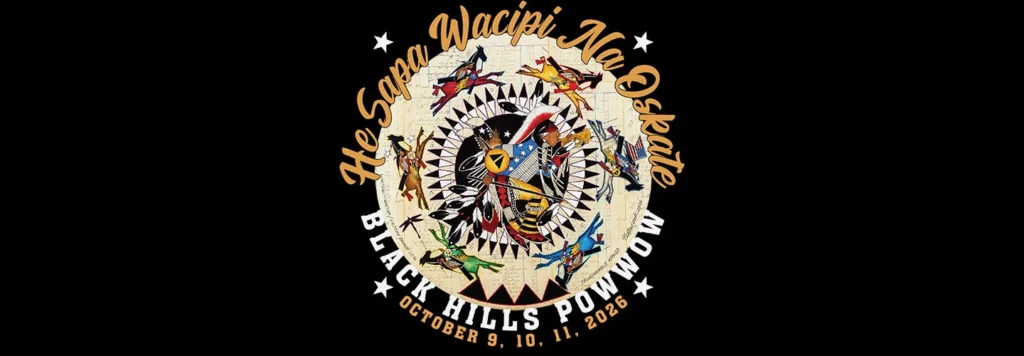
    The 38th annual He Sapa Wacipi Na Oskate, or Black Hills Powwow, opens Friday at The Monument and runs through Sunday night. Saturday morning brings the Indigenous Peoples’ Day Parade through downtown Rapid City. A few hours later, The Journey Museum opens a new exhibition tracing more than four decades of the Dream Catchers Artists Guild. On Monday, Main Street Square fills with artists, musicians, speakers, vendors and a free concert for NDN Collective’s Indigenous Peoples’ Day gathering.

    Across four days, Indigenous art in the Black Hills will take a lot of different forms.


    Three Days at He Sapa Wacipi

    The Black Hills Powwow begins Friday, Oct. 9, at Summit Arena at The Monument, continuing through Sunday, Oct. 11.

    Now in its 38th year, He Sapa Wacipi Na Oskate brings championship singers and dancers from many nations to Rapid City. The Black Hills Powwow Association says this year’s total prize payout will exceed $200,000, the largest in the event’s history, including $59,000 in singing prizes.

    Friday evening begins with a Veterans Grand Entry at 6 p.m., followed by the Dancer Grand Entry at 7. Dance contests continue into the night, alongside the Arts and Info Tradeshow and an 8 p.m. fashion show in Rushmore Hall.

    Saturday starts outside the arena.

    The Indigenous Peoples’ Day Parade lines up downtown before stepping off from Second and Main streets at 10 a.m. This year’s theme is “We Dance for the People.”

    Back at The Monument, Saturday’s schedule includes Veterans Grand Entries, intertribal dancing and competition throughout the afternoon and evening. Sunday continues with dancing, singing and contest finals before the 2026 Black Hills Powwow champions are announced.

    The powwow’s longtime invitation is a simple one: “Come Dance With Us.”

    He Sapa Wacipi Na Oskate – Black Hills Powwow 2026

    He Sapa Wacipi Na Oskate – Black Hills Powwow 2026

    Multiple Times: Oct 9 to Oct 11
    Fri 5:00 pm • Fri 7:00 pm • Sat 12:00 pm • Sun 12:00 pm
    The Monument in Rapid City
    The Black Hills Powwow brings together dancers, singers, artisans and spectators from the United States and Canada for a major American Indian…

    A Lakota Art Collective Returns to the Center of the Story

    Saturday afternoon offers another look at Indigenous art in Rapid City, this time through artists whose work stretches back decades.

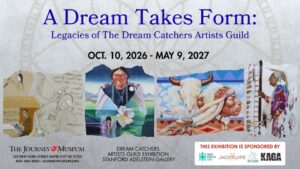
    The Journey Museum opens A Dream Takes Form: Legacies of the Dream Catchers Artists Guild with a free reception from 1 to 3 p.m. Curator Keith BraveHeart will be joined by Guild members Roger Broer, Donald Montileaux and Arthur Amiotte.

    The Dream Catchers Artists Guild was founded in 1983 by Oglala Lakota artists Vic Runnels, Donald Ruleaux and Richard Red Owl. Its members eventually included Amiotte, R.G. Bowker, Broer, Robert Freeman, Montileaux and Bobby Penn.

    The group worked to strengthen Lakota art, create professional opportunities for Native artists and encourage younger generations of artists. In 1987, the Guild held its first collective exhibition at the Sioux Indian Museum in Rapid City.

    A Dream Takes Form pulls work from the Sioux Indian Museum collection and other South Dakota museums, following the artists from the 1960s through the present with particular attention to the years when the Guild formed.

    The exhibition also happens alongside Woihanblapi at the Dahl Arts Center, another exhibition centered on work by Dream Catchers Artists Guild members. Together, the shows put the work of a group founded more than 40 years ago back into galleries in the city where the artists first exhibited together.

    Monday Moves Downtown

    On Monday, Oct. 12, NDN Collective takes over Main Street Square from 2 to 9 p.m. for its 2026 Indigenous Peoples’ Day gathering.

    The afternoon begins with a rally and continues with Indigenous and local food vendors, shops and interactive booths before closing with a free concert.

    The musical lineup includes Welby June, Santee Witt, Tiana Spotted Thunder, Isaac Tonasket, MIRACLE, Nevad Brave and The Bearhead Sisters. Robert Bordeaux will perform spoken word, DJ AIM! will DJ, and Cante Heart and Dean LaPointe will serve as emcees. Macklemore is scheduled for a special guest performance and is also listed among the rally speakers.

    NDN Collective describes the gathering as a celebration of Indigenous people “from the He Sapa to Palestine,” while also placing the event within its work around land, resistance and Indigenous organizing. Rally speakers include NDN Collective founder and CEO Nick Tilsen, Black Hills Clean Water Alliance organizer Duane Two Bulls, former Miss He Sapa Wiŋ Tyler Star Comes Out, Marilyn Allen and Eva Cardenas of the LANDBACK Action Network.

    For BHAB, the music lineup alone stretches well beyond one genre or one definition of what Indigenous music is supposed to sound like. Traditional voices, contemporary songwriting, hip-hop, spoken word and DJ culture all share the same downtown stage.

    Indigenous Peoples’ Day and Native Americans’ Day

    The holiday has two names in use locally.

    South Dakota law officially designates the second Monday in October as Native Americans’ Day, a legal state holiday established in 1990. State law dedicates the day to the remembrance of Native American leaders who contributed to South Dakota’s history.

    Many Rapid City organizations and events, including NDN Collective and Saturday’s downtown parade, use Indigenous Peoples’ Day.

    Crazy Horse Memorial continues the state’s Native Americans’ Day tradition Monday with a program beginning at 10 a.m. The schedule includes guest speakers and singers, a free buffalo stew lunch beginning at 11 a.m. and Indigenous artist-led craft workshops through 3 p.m.

    The Memorial traces its observance back to 1990, when Gov. George S. Mickelson called for the first Native Americans’ Day celebration there during South Dakota’s “Year of Reconciliation.”

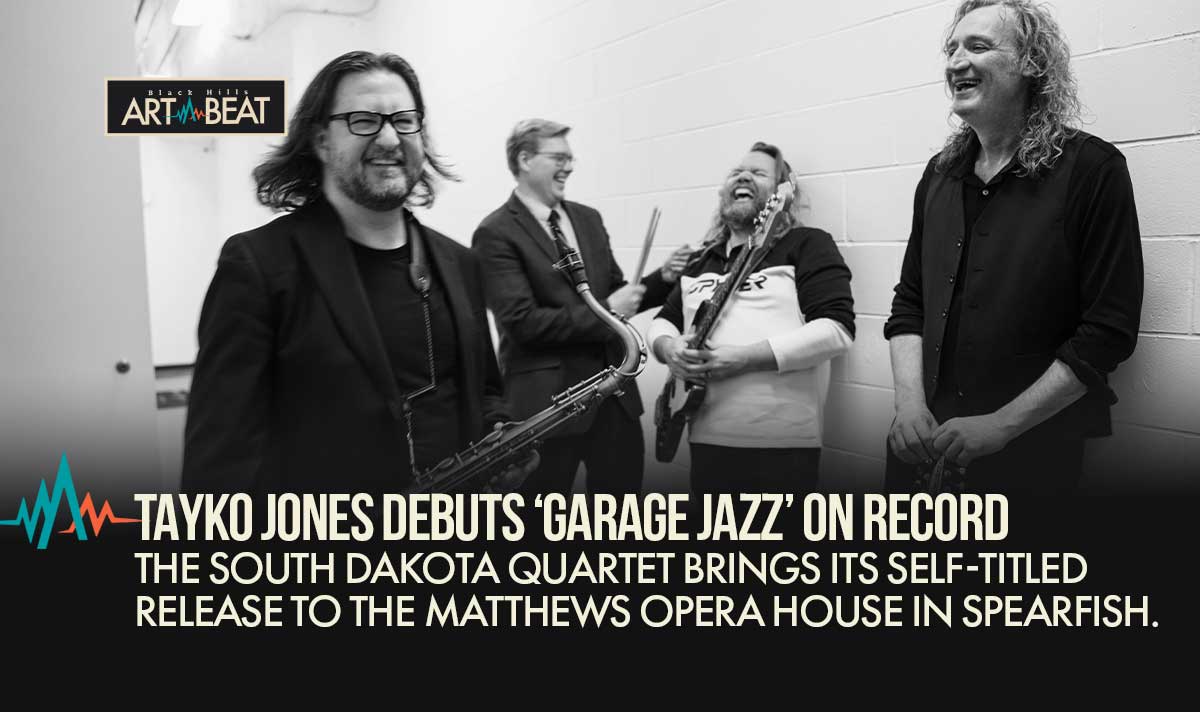
  • Tayko Jones Brings Garage Jazz to the Matthews

    Tayko Jones Brings Garage Jazz to the Matthews

    Grunge, rock and punk were the music that first made him want to keep playing for the rest of his life. The saxophone eventually became the instrument where he found his own voice, but those earlier sounds never really left.

    Tayko Jones gives him a place to use both.

    The four-piece band comes to the Matthews Opera House in Spearfish Friday, Oct. 9, for a Black Hills release show supporting its self-titled debut album. Shotwell plays saxophone alongside Mark Romanowski on guitar and bass, Jon Bakken on bass and cello, and Christian DeJongh on drums.

    The band calls what they make “Garage Jazz,” a phrase Romanowski came up with when the usual genre labels stopped being particularly useful.

    “Whenever you do a new project, especially with people from such different musical backgrounds, and you try to do something different, it’s really hard to categorize it,” Shotwell said. “I think Mark’s description is fitting for sure.”

    The name catches both halves of what Shotwell was trying to build.

    The songs draw from the grunge, rock and punk he grew up with, but the musicians approach those songs with the freedom of a jazz group. Structures remain recognizable. A tune might move through verses and choruses, A and B sections, or something closer to the form of a jazz standard. Inside those boundaries, very little is required to stay the same.

    “Every time we play a song it will be different,” Shotwell said. “That’s the ‘jazz’ part of the music.”

    A Band Built for These Four Musicians

    Tayko Jones has been playing together as a project for about two years, but Shotwell says the album was already part of the idea when he assembled the band.

    More importantly, he wasn’t simply looking for a guitarist, bassist and drummer, he wanted these three. Shotwell and Romanowski had already worked together on several projects, and Romanowski’s guitar playing had a sound Shotwell knew he wanted in the new music.

    After getting to know Bakken, Shotwell became interested in what he describes as his musical spirit and his tendency to approach things differently. Bakken moves between bass and cello in Tayko Jones, adding another set of textures to a group that already resists easy categorization.

    DeJongh brought another element Shotwell had specifically been looking for.

    “Christian’s drumming is snappy and adventurous, and I was drawn to his unique beats and improvisations on the drums,” he said.

    The lineup was so central to the idea that Shotwell says the songs probably would have changed if one of the three had turned him down.

    “When I asked the other three to do this project I had a record in mind, but it only would have worked with these three with me,” Shotwell said. “If any of them had said no I likely would have started coming up with new ideas.”

    He was already making sketches of songs with Romanowski, Bakken and DeJongh in mind. As they began playing those ideas together, the band’s sound started determining what the music became.

    Returning to the Garage

    For Shotwell, the project also opened a door back into the music he played before jazz became such a large part of his life.

    “I grew up playing in garage bands,” he said. “I played bass in most of them, and that music is what really made me want to do this the rest of my life.”

    The saxophone offered something different.

    “I always loved the saxophone, and it was always the instrument I could be most expressive with,” he said. “It allows my voice to come out.”

    Tayko Jones puts those two histories in the same room.

    “This project lets me live in both of those places, and it really lets me play in a very honest way.”

    That combination also helps explain why “Garage Jazz” works better as a description than trying to place the band neatly inside rock or jazz.

    Shotwell sees an obvious connection for listeners who grew up with music from the 1980s and ’90s, but the band retains the improvisational side of jazz, where the musicians are listening to one another and changing the music while it is happening.

    Shotwell has written the band’s material so far, although the group has recently started experimenting with a piece DeJongh wrote several years ago. Sometimes Shotwell arrives with a complete composition, other times he brings a fragment and lets the band pull on it.

    “My big thing is if there is an idea we should try it, no matter what, but leave room for it to change,” he said.

    That includes ideas that don’t work the first time.

    “Mistakes are most welcome, as they will spark new ideas.”

    Capturing One Version

    That approach followed Tayko Jones into the studio. The debut album was recorded live, with the four musicians playing together rather than building each song piece by piece, each take was different.

    The band listened back and selected the performances they thought worked best, leaving the record as a document of what happened during those particular takes rather than a definitive version of how the songs are supposed to sound.

    “The album captures the true ‘in the moment’ nature of jazz music, but definitely holds a sound that is much different than a traditional jazz album,” Shotwell said.

    Even he hesitates to decide exactly how much of it should be called jazz.

    “I’m not sure you could call it jazz, though the more I learn about jazz the less idea I have of how to define it.”

    The record is currently streaming through Bandcamp, a platform Shotwell chose in part because listeners can purchase music directly and a larger portion of those sales reaches independent artists.

    “There are great artists on there, independent and nationally known big-name artists,” he said. “It’s a great way to support people who want to keep making stuff.”

    Listeners can hear and purchase the self-titled Tayko Jones album at joelshotwell.bandcamp.com.

    What Happens at the Matthews Won’t Happen Again

    Friday’s Spearfish show will include the songs from the album along with new material the band has been developing.

    Anyone who learns the record before the concert shouldn’t expect to hear it reproduced note for note. The songs will retain the same basic moods and structures, but the performance depends on what the four musicians hear from each other once they begin playing.

    “The venue, the audience, the time of day… they all contribute to what’s going to happen musically,” Shotwell said.

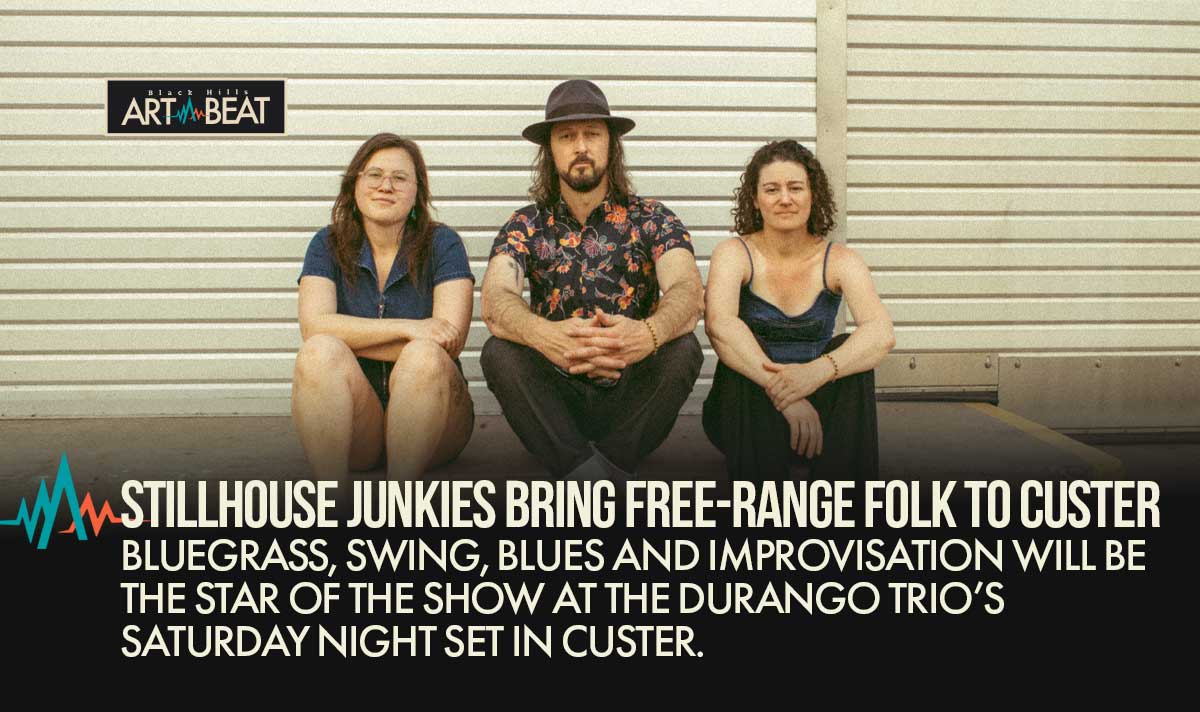
  • Stillhouse Junkies at Custer Beacon

    Stillhouse Junkies at Custer Beacon

    Stillhouse Junkies have spent nearly a decade building a sound that stretches well beyond traditional bluegrass.

    The Durango band works from a familiar string-band setup: guitar and mandolin, fiddle and upright bass. In the hands of Fred Kosak, Alissa Wolf and Jeanette Adams, that setup moves through bluegrass, Texas swing, blues, rock and improvisation. They also spend a lot of time putting it in front of audiences, playing more than 150 shows a year.Stillhouse Junkies have spent nearly a decade turning three acoustic instruments into a band that refuses to stay in one lane.

    The Durango trio of Fred Kosak, Alissa Wolf and Jeanette Adams works from a familiar string-band setup: guitar and mandolin, fiddle and upright bass. From there, the music moves through bluegrass, Texas swing, blues, rock and improvisation, backed by a touring schedule that keeps them on the road for more than 150 shows a year.

    On Saturday, Oct. 10, they bring that sound to the Custer Beacon.

    If bluegrass is the first word that comes to mind when you see fiddle, mandolin and upright bass, it is a reasonable starting point. It just does not explain all that much about Stillhouse Junkies.

    The band calls what it does “free-range folk,” moving between roots music, bluegrass, Texas swing, blues and rock. Fred Kosak plays guitar and mandolin, Alissa Wolf plays fiddle and Jeanette Adams plays bass, with improvisation built into the way the trio performs its original songs. (stillhousejunkies.com)

    A useful place to start listening is “Colorado Bound,” from the 2022 album Small Towns. The song carries some of the band’s bluegrass foundation, but it also points toward one of the things that makes Stillhouse Junkies particularly interesting out West: their songs have a strong sense of place.

    Kosak told WMOT in 2022 that place sits “at the forefront” of his writing. Small Towns is full of Colorado geography, mountain towns and travel, including songs tied to Ridgway and Leadville. Kosak came to Durango after teaching school in Boston, looking for a mountain community and finding one that quickly began turning up in his songs.

    The band itself grew out of that community.

    Stillhouse Junkies began in 2017 after musicians started finding one another through local jam sessions in Durango. An early version of the band landed a regular Friday gig at Durango Craft Spirits. The personnel changed as the group developed, but Kosak and Wolf remained at its center as the residency turned into recordings, touring and eventually national recognition.

    Wolf brought a different path into the group. She grew up in Durango, studied violin classically and eventually began pushing herself toward music that required learning by ear and improvising. In the WMOT interview, she described deliberately putting herself into musical situations where improvisation was unavoidable. That combination of classical training and roots-music looseness helps explain why Stillhouse Junkies can sound tightly arranged one moment and considerably less predictable the next.

    That range is easier to hear on one of the band’s 2026 live releases. “Big River > Hard Telling,” recorded at the Mancos Opera House in Colorado in March, runs nearly eight minutes, giving the trio room to stretch well beyond the shape of a compact bluegrass song.

    The road eventually led Stillhouse Junkies to the International Bluegrass Music Association. They were selected as official showcase artists for IBMA World of Bluegrass and, in 2021, received the organization’s Momentum Band of the Year award, an honor aimed specifically at artists in the early stages of building professional bluegrass careers. ()

    Their music has kept moving since.

    In 2025, Stillhouse Junkies released The Ballad of Charlie Avalon, a concept album written by Kosak around a fictional traveling musician. The record was inspired in part by Mississippi John Hurt and in part by Kosak’s own observations about trying to build a life in the music business. Joe Newberry contributed banjo, while Sam Bush provided spoken narration connecting sections of the story. (

    It is a much bigger idea than simply putting another collection of songs on an album.

    The record moves through the life of its central character in songs and short narrative sections, including “The Whiskey Works The Same In New York City,” “Somebody’s Got To Lose It All,” “Levee” and the closing “So Long.” The last of those is a good way into the album if you want to hear where the band’s songwriting has gone since Small Towns.

    The current trio is Kosak, Wolf and bassist Jeanette Adams. Their official material describes live performances as free-flowing and improvisational, with original songs that can take a different path from one night to the next.

    Saturday’s Custer show puts all of that into a fairly simple setting: three musicians, three acoustic instruments and a room built for listening.

    The Beacon currently has Stillhouse Junkies scheduled from 7 to 10 p.m. Saturday, Oct. 10, describing them as “free range folk from the mountains of Colorado.” (custerbeacon.com)

  • Polo G Comes to The Box Friday Night

    Polo G Comes to The Box Friday Night

    With a No. 1 single, a No. 1 album and several years of platinum records behind him, Polo G arrives in the Rapid City area as one of the bigger contemporary hip-hop bookings of the year.

    His rise happened quickly.

    “Pop Out,” his 2019 collaboration with Lil Tjay, became the breakout track from his debut album, Die a Legend. Rolling Stone later named the album one of the 50 best releases of 2019, describing Polo G as an emerging leader in a new generation of melodic Chicago rap.

    The albums that followed pushed him considerably further.

    The Goat arrived in 2020. A year later, “RAPSTAR” debuted at No. 1 on the Billboard Hot 100, giving Polo G his first chart-topping single. His third album, Hall of Fame, also reached No. 1 on the Billboard 200.

    By that point, songs including “Martin & Gina,” “21,” “Epidemic” and “RAPSTAR” had taken a sound rooted in Chicago street rap into a much larger audience.

    Rolling Stone included Hall of Fame among its best albums of 2021 and placed “RAPSTAR” on its list of the year’s best songs.

    The commercial success is only part of why Polo G stood out.

    His music has consistently returned to grief, violence, addiction, family, depression and the complicated experience of leaving a neighborhood while continuing to carry it with you. He frequently moves between rapping and singing, putting some of his heaviest writing over melodic production that helped make those songs accessible far beyond Chicago.

    That combination runs through Die a Legend, The Goat and Hall of Fame, even as the records grew larger and the guest lists became more recognizable.

    His collaborations over the years have included Lil Wayne, Nicki Minaj, Roddy Ricch, Young Thug, Pop Smoke, Lil Baby and others, placing Polo G squarely inside mainstream hip-hop rather than at its edges.

    He has continued releasing music well beyond the run that produced his biggest chart records. HOOD POET arrived in 2024, followed by Hood Poet Black Heart Edition in 2025, and 2026 has brought another string of singles.

    For Black Hills listeners, that history puts Friday’s show in some perspective.

    This is an artist who has topped both of Billboard’s major singles and album charts, accumulated a catalog of widely streamed records, worked with some of the biggest names in contemporary rap and remained active seven years after his debut.

    Friday night, that catalog lands at The Box in Box Elder.

  • Bonzeye Tiny Shop Welcomes BHAB

    Bonzeye Tiny Shop Welcomes BHAB

    The Tiny Shop is Making Room for the Big Black Hills Arts Scene

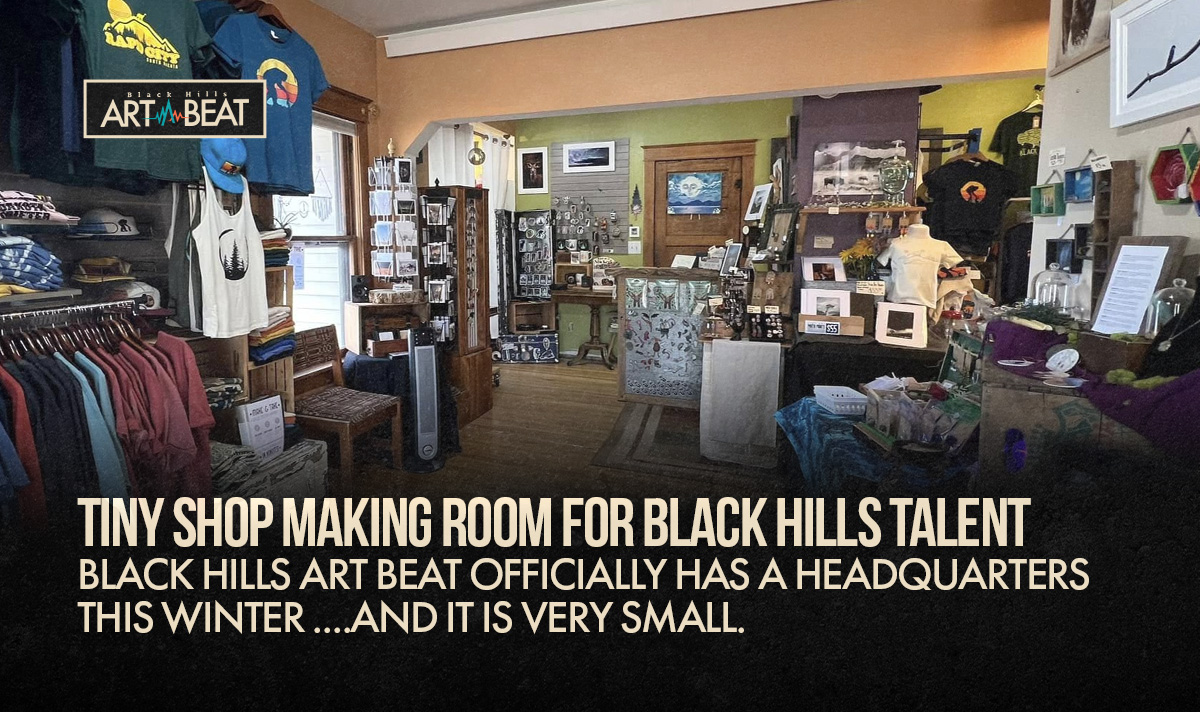
    Black Hills Art Beat officially has a headquarters this winter, and it is very small.

    If you’ve known me for a while, you probably know me wearing a different business hat. I’m Bonzeye Studio. I’m Black Hills Stickers. I’m a photographer and a graphic designer and probably some other stuff I can’t think of right now. In short… I wear a lot of hats.

    This year, I threw a new one into the mix: BHAB.

    For most of its first year, Black Hills Art Beat has lived on my computer. I have had the privilege of observing this incredible community in our big beautiful backyard – I have spent the last 6 months talking to and about local artists, local music, local books, local events, and all the people working to build a stronger arts scene in the Black Hills.

    In the past, those hats I wear have mostly centered around me, and my many talents, and the Tiny Shop has been a place where I showcase my work in some version of a very small store since 2016. These days, the Tiny Shop exists as a “sometimes store” I open seasonally around the holidays (or when a friend is in town and wants to stop by). Mostly, it exists to stay connected to old friends and show off whatever new art thing I am currently obsessed with.

    This year, that thing is Black Hills Art Beat.

    The Tiny Shop is usually packed with art, apparel, stickers, jewelry, note cards and all the other things I apparently cannot stop designing or collecting.

    But spending this past year talking to so many of the people making things here has changed the way I look at that little shop. There is a ridiculous amount of talent in the Black Hills, and I want to make more room for it.

    So this year, I’m opening the doors a little wider.

    BONZEYE Tiny Shop is back for the 2026 holiday season, and this year the Tiny Shop at 616 West Street has picked up another job: Black Hills Art Beat headquarters.

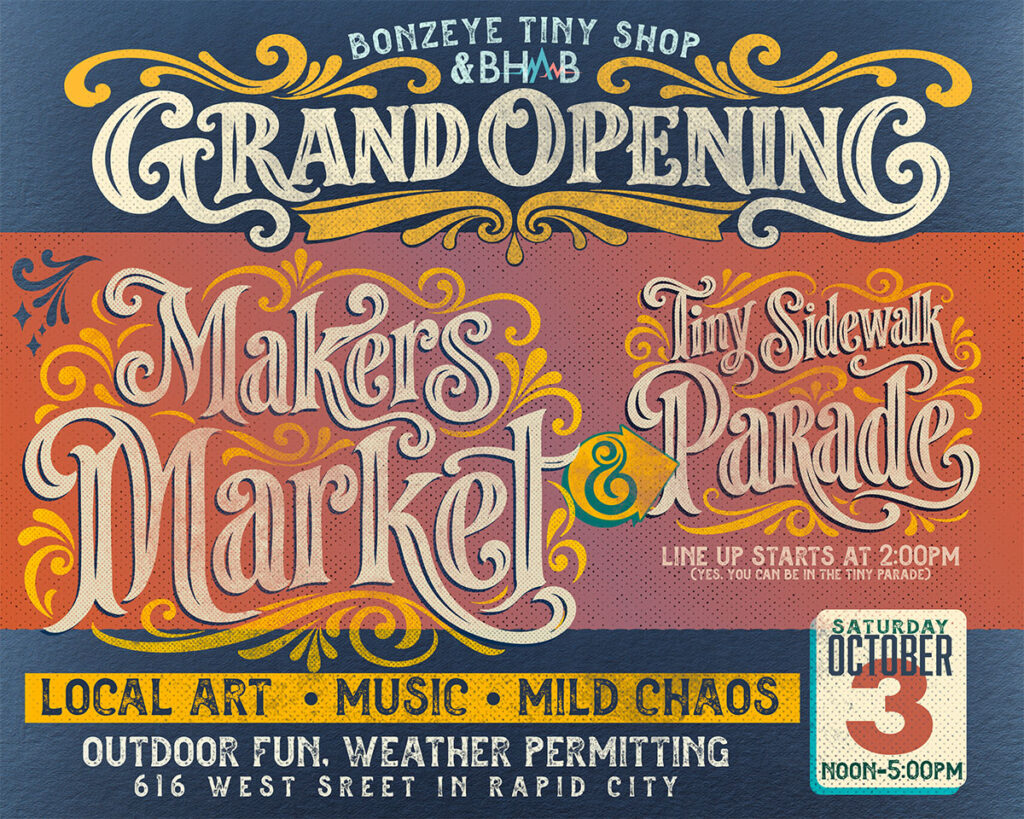
    We’re kicking things off Saturday, October 3, with the Tiny Shop open from noon to 5 p.m., a small curated maker market in the yard, and whatever other shenanigans we can reasonably pull together.

    Weather permitting, a handful of local artists and makers will be setting up outside for the kickoff, and the shop itself will carry more work from local musicians, authors and artists throughout the holiday season.

    If October decides not to cooperate, that portion will be canceled, but Tiny Shop will still open for the season and the kickoff will still happen.

    The market will stay small and curated because, as the name suggests, Tiny Shop is actually tiny.

    The shop will remain open through Christmas, with regular holiday hours still being worked out.

    BONZEYE + BLACK HILLS ART BEAT

    If you’ve noticed Black Hills Art Beat showing up around BONZEYE this year, there’s a simple reason… They’re both me.

    The Tiny Shop gives us a physical place where artists can sell things. Black Hills Art Beat gives us a way to help people discover the artists behind those things.

    Putting the two together just makes sense.

    I want someone to be able to walk into Tiny Shop, pick up an album by a Black Hills musician they haven’t heard before, find a book by a local author, notice a piece of artwork on the wall and have an easy way to learn more about the person who made it.

    Over time, I want to connect the shop and BHAB even more.

    That includes artist profiles and an interactive in-shop BHAB portal where you can listen to local music, explore an artist’s work, find out where they are playing next, dig through the event calendar and discover more ways to support them.

    It also gives BHAB an actual front door.

    Come in and tell me about a show. Bring me a flyer. Tell me about an artist I should know. Pull up the calendar and figure out what you’re doing this weekend.

    MUSICIANS, AUTHORS + ARTISTS

    I’m also looking for more Black Hills work to carry through the holiday season.

    If you’re a local musician with physical releases, I want to hear from you. CDs, vinyl, cassettes and other physical releases are welcome.

    The same goes for Black Hills authors with books in print.

    Those are the two areas where I want to keep the door fairly open.

    I’ll also be selecting work from other local artists and makers where space allows. Paintings, prints, photography, illustration and other work may be considered, but shelf and wall space are limited, so those pieces will have to be more selective.

    Makers Market & Tiny Sidewalk Parade

    Oct 3 • 12:00 pm
    Bonzeye Tiny Shop & Black Hills Art Beat HQ in Rapid City
    BONZEYE Tiny Shop is back. We’re kicking off the 2026 holiday season on Saturday, October 3 with the new and improved Bonzeye…

    Know Before You Go

    What: BONZEYE Tiny Shop 2026 Holiday Kickoff

    When: Saturday, October 3, noon–5 p.m.

    Where: 616 West Street, Rapid City

    What’s happening: Tiny Shop opens for the holiday season, with a small curated outdoor maker market, local art, books, music, gifts, possible live music, snacks and shenanigans.

    Weather note: The outdoor maker market is weather permitting. Tiny Shop will still open and the kickoff will still happen if the market has to be canceled.

    After October 3: Tiny Shop will remain open through Christmas. Regular holiday hours are still to be determined.

    For now, BHAB headquarters looks like a very small shop, a yard full of makers and whatever we manage to pull together before noon on October 3.

    Come for the art. Stay for the shenanigans.

  • What to Know About the 2026 Black Hills Film Festival

    What to Know About the 2026 Black Hills Film Festival

    Friday night at the Journey Museum, the Black Hills Film Festival opens its 17th year with two films built around adventure, including one with deep roots in the Black Hills.

    The festival runs Friday, Oct. 2 through Sunday, Oct. 4, with all screenings and panels taking place at the Journey Museum in Rapid City. This year’s program includes documentaries, narrative shorts, student films, international selections, a block devoted to South Dakota films and another centered on Native American stories.

    Opening Night: Adventure and the Conns

    The festival begins Friday at 6:30 p.m. with The Great Nomad Expedition, a documentary following a 1,200-kilometer journey across Mongolia by camel, yak, horse and reindeer.

    It is followed by the South Dakota premiere of Catching Pinecones, director Chad Heddleston’s feature documentary about Jan and Herb Conn. The couple became fixtures of Black Hills climbing and caving history, establishing more than 200 first ascents in the Needles. A discussion follows the films.

    Saturday Starts With Two Free Filmmaker Panels

    Saturday programming begins before the films, with two free panel discussions from 10 a.m. to noon hosted by KOTA’s Alicia Garcia.

    The first, Documenting History & Nature, runs from 10 to 11 a.m. and looks at documentary filmmaking involving history, nature and wildlife. Courage and Conviction follows from 11:10 a.m. to noon, focusing on what it takes for independent filmmakers to bring a project from an idea to the screen. Several filmmakers appearing in this year’s festival are scheduled to participate.

    The films begin at 1 p.m.

    Saturday Puts South Dakota on Screen

    One of the most locally focused portions of this year’s festival comes Saturday afternoon.

    The 3:15 p.m. South Dakota Films session includes four films with familiar places, people and subjects.

    Welcome to the BHUC, directed by Scott H. Thornburg, goes underground at the Sanford Underground Research Facility to look at the search for dark matter and the work of researchers from Black Hills State University’s Black Hills Underground Campus.

    Mount Rushmore: Carved in Stone tells the story of the memorial through six chapters covering presidential legacies, Indigenous perspectives and the workers involved in the carving.

    Rumble on the Plains, directed by Erin Page, follows the people behind the annual Custer State Park Buffalo Roundup.

    Chasing Tables, directed by Justin Bergh, follows Sioux Falls chef Jordan Taylor and his path back to South Dakota after training and working in Pacific Northwest restaurants.

    Saturday’s evening session moves farther afield, with the short narrative 3 Minutos, documentary Zastava Brothers and feature documentary The Snake and the Whale.

    Sunday Includes a Native American Film Block

    Sunday screenings begin at 1 p.m. with Aitä, Leaf and Hole in the Wall: The Ultimate Outlaw Fortress, followed by a discussion.

    At 3:15 p.m., the festival shifts to its Native American Films session.

    The program includes Poos, a short animated film incorporating Blackfoot language and culture; Healing Ribbons, One Stitch at a Time, a documentary centered on intergenerational Indigenous women; Ireland and the First Nations, exploring historical connections between Irish immigrants and First Nations people in North America; and Courage, a short narrative about a Native American boy connecting with identity through hoop dance.

    The weekend concludes with the Audience Choice Award presentation from 6 to 6:30 p.m. Sunday.

    2026 Black Hills Film Festival Schedule

    DayTimeProgram
    Friday, Oct. 26:30–9 p.m.The Great Nomad Expedition, Catching Pinecones + discussion
    Saturday, Oct. 310 a.m.–noonFree filmmaker panels
    1–3 p.m.The Nicobar Pigeon, Unlocking the Wisdom of an Ancient Canoe, Dream Touch Believe
    3:15–5:15 p.m.South Dakota Films: Welcome to the BHUC, Mount Rushmore: Carved in Stone, Rumble on the Plains, Chasing Tables
    6:30–9 p.m.3 Minutos, Zastava Brothers, The Snake and the Whale
    Sunday, Oct. 41–3 p.m.Aitä, Leaf, Hole in the Wall: The Ultimate Outlaw Fortress + discussion
    3:15–5:45 p.m.Native American Films: Poos, Healing Ribbons, One Stitch at a Time, Ireland and the First Nations, Courage + discussion
    6–6:30 p.m.Audience Choice Award presentation

    The full schedule also includes lobby entertainment at 12:30 p.m. Saturday and Sunday. Doors open 30 minutes before each screening session.

    A New Award for Films Made in South Dakota

    BHFF has also added the REEL SD Film Award this year. The award is for films containing scenes shot in South Dakota and was created to encourage more filmmaking in the state.

    It joins the festival’s other categories for feature and short narratives, feature and short documentaries, student films and the audience-selected People’s Choice Award.

  • Buffalo Roundup Weekend

    Buffalo Roundup Weekend

    Before the buffalo start moving Friday morning, Custer State Park will already be well into the first day of Roundup weekend.

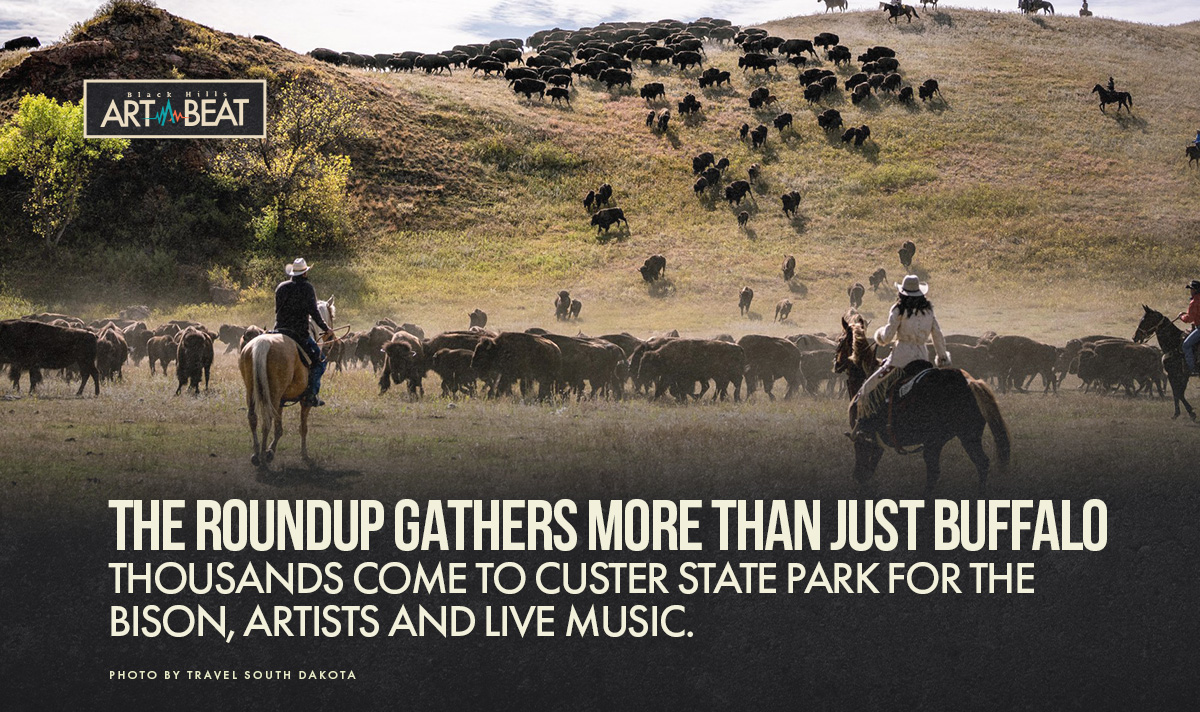
    The Buffalo Roundup Arts Festival opens Thursday, Sept. 24, beginning three days of regional art, food, activities and live music at the State Game Lodge grounds. On Friday morning, attention shifts down the Wildlife Loop Road, where thousands of people will gather to watch riders move Custer State Park’s bison herd toward the corrals.

    The 61st Annual Buffalo Roundup begins at approximately 9:30 a.m. Friday, Sept. 25. South Dakota Game, Fish and Parks estimates the current herd at about 1,300 bison. The Roundup is part of the park’s annual herd-management work, allowing staff to count, examine and sort animals according to what the park’s grasslands can support.

    About 60 horseback riders, including park staff, selected volunteers and invited riders, take part in moving most of the herd toward the corrals. Once the animals are safely contained, visitors can watch park crews work a portion of the herd, including branding, ear tagging, vaccinations and health checks.

    And while Friday morning’s herd gets most of the attention, there is quite a bit happening around it.

    Three Days of Music at the Big Top

    The Arts Festival begins Thursday with music running throughout the day under the Big Top Tent.

    Thursday, Sept. 24

    • 10–11:30 a.m. — Stringbean and Sally
    • Noon–1:30 p.m. — Jalan Crossland
    • 2–3:30 p.m. — Johnny Hastings & Stillhouse Down
    • 4–5:30 p.m. — The Wilt Brothers

    Thursday’s lineup ranges from longtime Black Hills performers Stringbean and Sally to Wyoming singer-songwriter Jalan Crossland and the blues of Johnny Hastings & Stillhouse Down.

    The music continues Friday as the activity at the corrals and Arts Festival grounds overlap.

    Friday, Sept. 25

    • 10–11 a.m. — Badger Sett Band
    • 11:30 a.m.–12:30 p.m. — Ryan LittleEagle
    • 1–2:30 p.m. — Lonely Rangers
    • 3–4:30 p.m. — Tyler Bills
    • 5–7 p.m. — The Josh Cleveland Band

    Badger Sett Band opens the day with music built around the poetry of Badger Clark. Ryan LittleEagle follows with his blend of country, Americana and First Nations musical roots, with Black Hills performers filling out the afternoon before The Josh Cleveland Band closes Friday’s live music.

    Weather permitting, hot-air balloons will also gather on the Arts Festival grounds for a night glow at 7 p.m. Friday.

    Saturday begins with a pancake feed from 8 to 10 a.m. before the final day of Big Top performances.

    Saturday, Sept. 26

    • 9–10 a.m. — Doug Figgs
    • 10:30–11:30 a.m. — Allen and Jill Kirkham
    • Noon–1:30 p.m. — Ramblin’ Rangers
    • 2:30–4 p.m. — Starr Chief Eagle’s Hoop Dance

    Starr Chief Eagle, an enrolled member of the Sicangu Lakota Tribe, will also be at the Custer State Park tent Friday and Saturday for a hands-on beaded necklace activity and cultural storytelling before closing the festival Saturday with hoop dancing.

    The Arts Festival

    The 33rd Annual Buffalo Roundup Arts Festival runs all three days with regional artists and makers showing jewelry, painting, photography, pottery, woodworking and other work across the State Game Lodge grounds.

    Festival hours are 10 a.m.–6 p.m. Thursday, 10 a.m.–7 p.m. Friday with vendors closing at 6 p.m., and 9 a.m.–4 p.m. Saturday. Family activities are scheduled throughout the weekend, and small golden bison will be hidden among festival booths each day for visitors to find and exchange for a Custer State Park prize.

  • Rapid City Is Getting a New Stage

    Rapid City Is Getting a New Stage

    Rapid City Is Getting a New Stage

    Rapid City has plenty of people willing to put on a show and finding the right space may get easier.

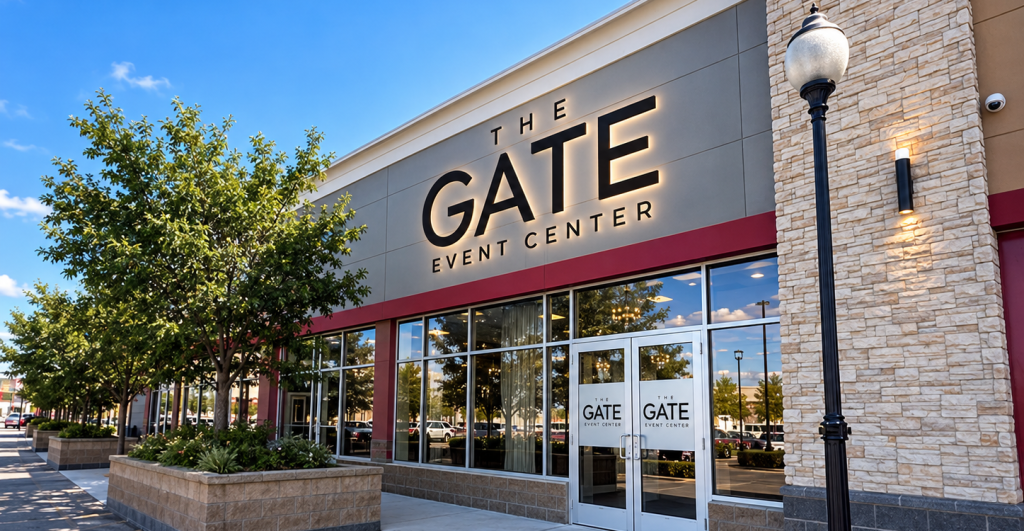
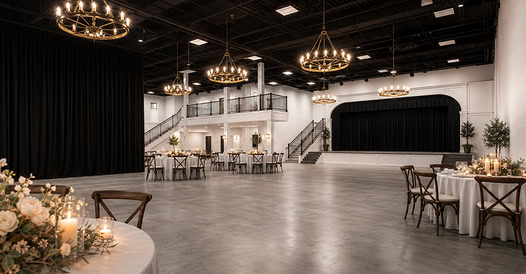
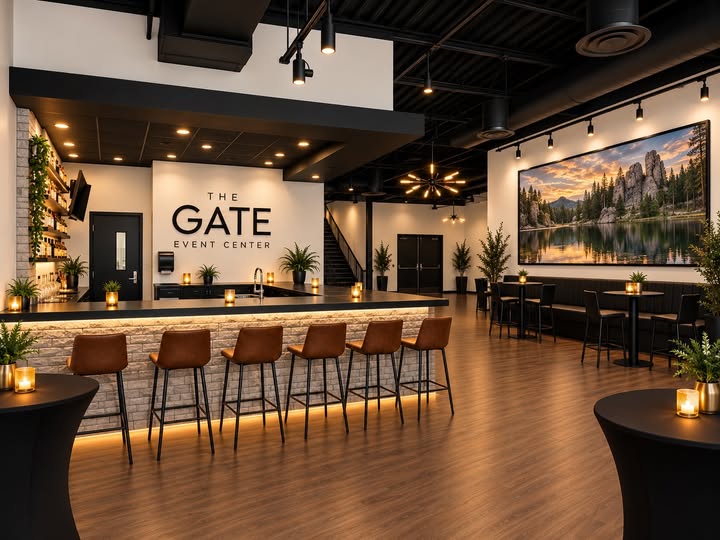
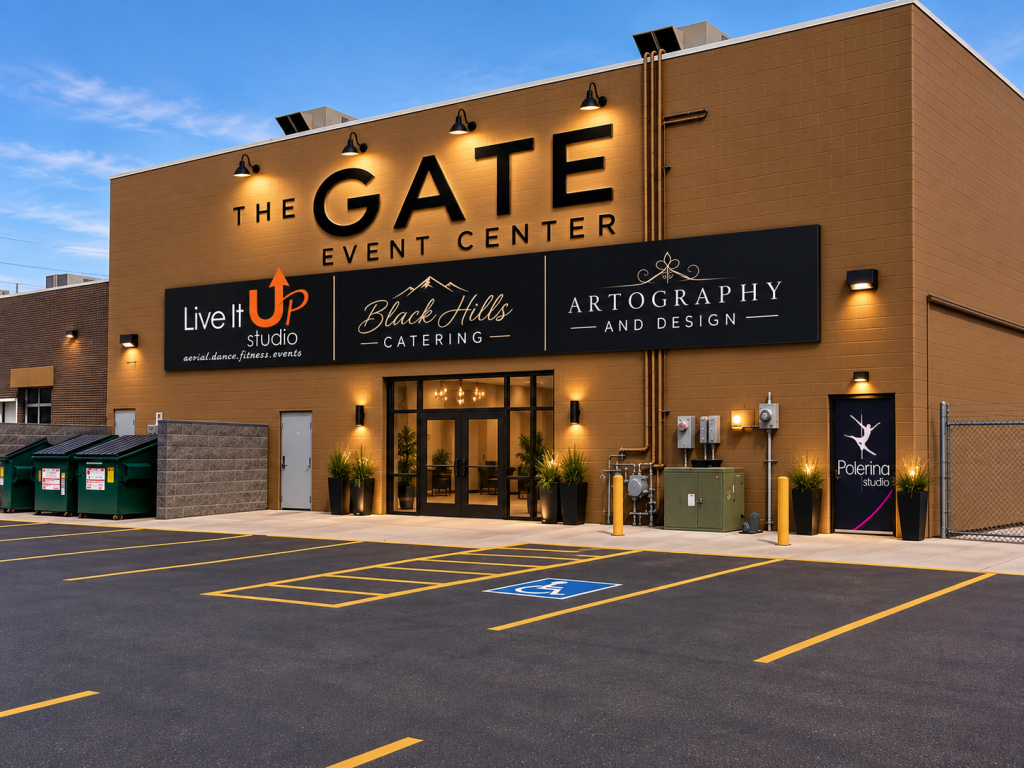
    That is part of what makes The Gate Event Center interesting before it has even opened its doors. Inside the former Northgate Theater, owners Breawna Schwartz Ventura, Trinity Conrad and Anna Starenkova are creating a venue with room for roughly 600 people and enough flexibility to move between concerts, aerial dance, competitions, weddings, recitals, corporate events, community gatherings and whatever else local producers can dream up.

    For Schwartz Ventura, who also owns Live It Up Studio, the idea comes from years spent on the other side of the equation. Her company has produced dance recitals, aerial performances and competitions, including the Black Hills Aerial Cup, while navigating the same venue questions faced by musicians, promoters, theater groups and independent event producers across the area: Where can we fit? Can we afford the room? Does it work for the kind of event we are actually trying to produce?

    The Gate gives her a chance to build some of those answers into the space itself.

    The plans include a much larger stage, professional lighting and sound support through Perfect Wave Production, room for aerial apparatus, flexible sections that can change with the event, a commercial kitchen and enough open floor space to accommodate productions that do not fit neatly into the usual theater, ballroom or bar setup. Live It Up’s aerial work will have a home there as well, giving performers the vertical space needed for a form of dance built as much around movement above the floor as across it. The Gate may already be growing beyond the needs of the businesses that created it.

    Schwartz Ventura said the original plan was to begin the project, continue some of Live It Up’s programming there and see how much interest developed around outside events. They did not have to wait long.

    “It feels like the events is going to be taking over because we’ve had just so many calls about it,” she said. “We kind of knew that because we’ve been trying to find places for ourselves, and it’s really hard.”

    The calls have come from different corners of the community. A bridal show has expressed interest. Concert and event producers have reached out. Caterers are asking about the commercial kitchen. There have been conversations about recurring rentals, performances, classes and other uses the owners had not necessarily mapped out when the project began.

    “The more that we’re in the space, the more we’re like, okay, this events thing is probably going to be the thing,” Schwartz Ventura said.

    That response may be the clearest indication of what The Gate could become.

    Rapid City already has large arenas, traditional theaters, bars, galleries, studios and smaller performance rooms, but local producers often find themselves trying to make an event fit a space that was built for something else. A growing artist may be too big for a small room without being ready for an arena. A dance company needs a different kind of floor and backstage setup than a band. An aerial competition needs height. A wedding, vendor show or corporate gathering needs yet another configuration. The Gate is being designed around the idea that the room can change instead.

    Schwartz Ventura repeatedly described a space that could hold a dance competition one weekend, a concert the next, a wedding after that, something nobody has proposed yet the week after and still hold a chuch service on Sunday. The early calls suggest people are already imagining their own dream events.

    For a city full of artists, promoters, teachers, performers and organizers who have spent years asking where they can put the next idea, Rapid City is about to have one more answer.