

Get to Know Abbey Leach
With a voice that pulls you closer and lyrics that stay behind, Abbey Leach brings nearly a decade of songwriting into focus on her debut album, The Art of Becoming:
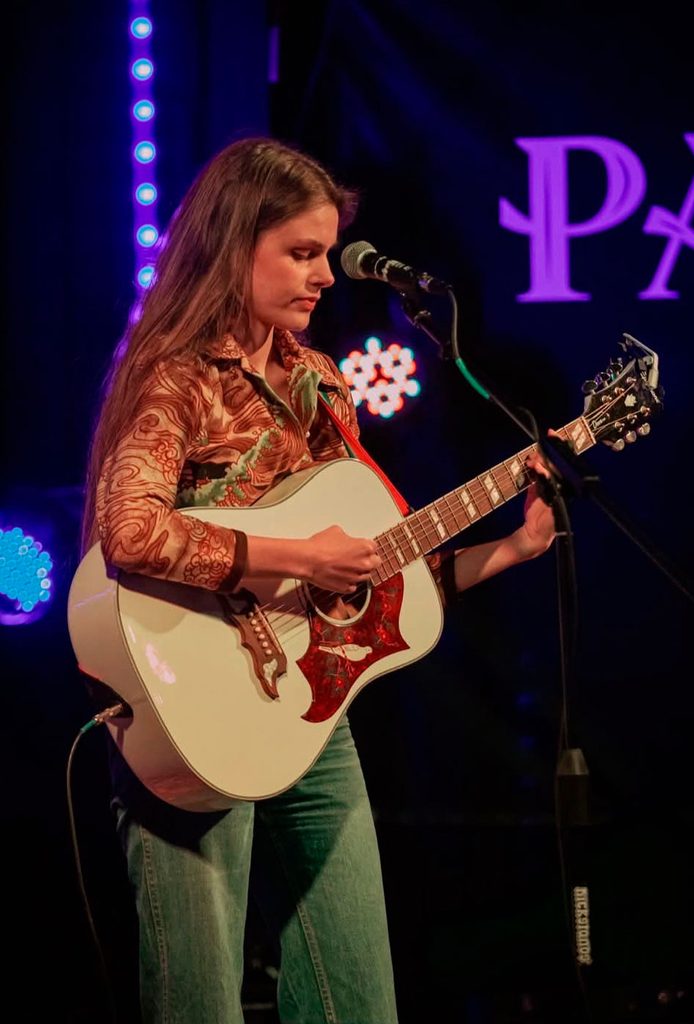
The first time I heard Abbey Leach play, she was part of a backyard concert with three other women. They took turns with the songs. One would play, then the next, then the next. They were all fantastic, but Abbey was the one I went home thinking about.
A few weeks later, I got a call from Brieanne over at the 707 Nightclub. She was looking for an opener for Mason Jennings and asked me my thoughts on a couple of other performers. Before the question was really finished, I was already talking about Abbey.
“Yeah, those guys are good,” I said. “But have you heard Abbey Leach? I think she’d be perfect.”
She was.
I still have a hard time explaining exactly what caught me that first night. I’m not a music critic, and I’m not interested in pretending to be one. I know what stays with me, though, and Abbey’s songs stuck.
Abbey is funny and warm, with an old-soul streak that shows up in the songs. There is something immediately familiar about her music. You can hear one for the first time and have the strange feeling that you already know it, like an old folk tune you can’t remember learning because it seems to have always been there.
Abbey writes in pictures. She has a song about digging flowers out of a garden when she moves, unwilling to leave behind something she spent a season growing. Another wonders what happens when someone who once showed up for the hard work of activism gets pulled further into the static of ordinary life. “Susanna” looks at motherhood, expectation and the distance between having choices and actually being free to make them. “Goodbye San Francisco” chases the old counterculture promise of the city, then finds the reality stranger, harder and much less romantic than the dream. Abbey can see what generations of artists went looking for there. She also knows it isn’t her place.
There is often a little edge in Abbey’s songs; she notices where life failed to live up to its own sales pitch.
Abbey is careful about explaining her songs too much. Once the backstory is pinned down, she thinks some of the possibility disappears. You may hear one thing in a song while the person sitting next to you hears something completely different, and she likes leaving that door open. The songs she trusts most often arrive before she fully understands what they mean, and only later does she go back and interpret them almost like dreams.
Abbey started playing guitar at six or seven in a house where music was already part of everyday life. Her dad had written songs and played in a band before he had children, but had not received much encouragement from his own family. With Abbey, he made a different choice. There were lessons, instruments, family harmonies and two huge Beatles anthology books worn nearly to pieces from use. …
She started writing instrumental music around 12 and lyrics around 15. By 16, she had recorded an eight-song album at home, complete with piano parts and string arrangements she wrote herself.
Abbey still has that album, but the recording itself never caught up with what she had built. More than anything, it represents an entire period of writing she wishes had been preserved better. One of those teenage songs stuck around. “You Always Do,” written when Abbey was 16, made it onto her new record. She wrote it on piano and later moved it to guitar, where some of the chords became a little unexpected because they had been built for another instrument. Abbey knows she would not write the same song today.
“I think it holds up because of its purity,” she told me.
That old album changed the way Abbey thought about recording. “If I don’t record this at some point, like, this is just going to be gone,” she said. She compared recording to taking photographs. “I want it for later.”
Learning to Be Loud Again
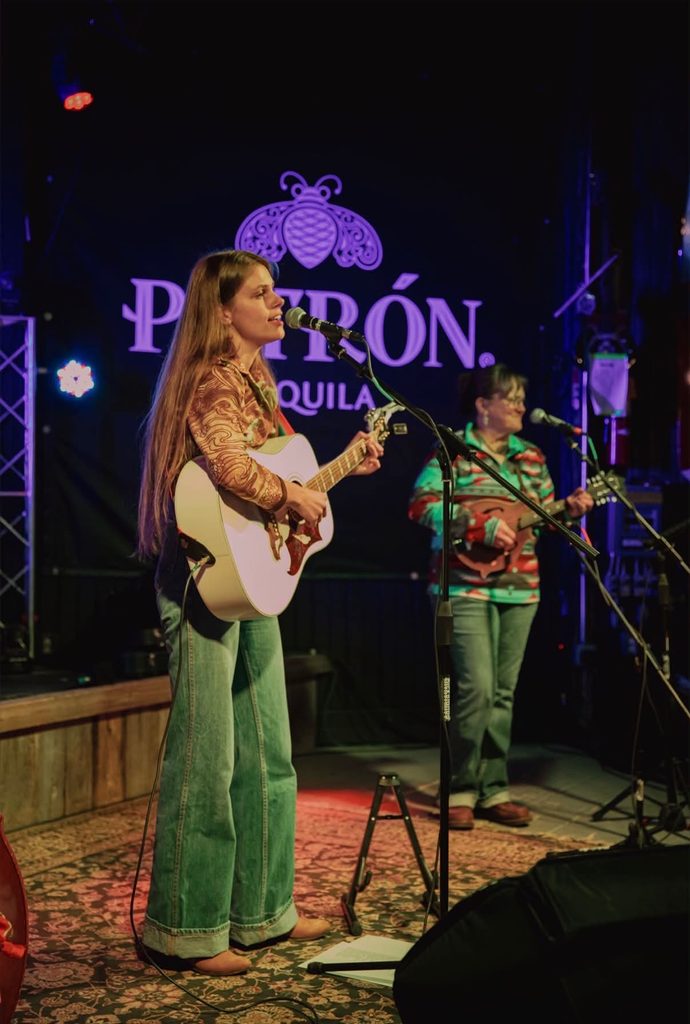
Abbey grew up in Idaho after moving there from California at eight, first in Star and later in Boise. By the time she left Idaho for the Black Hills, she had already been writing for years and playing live, including shows with her partner, Casey Shelden. What she still wanted was a band built around her own songs.
In 2023, Casey’s work with Kenny Feidler and The Cowboy Killers made the distance between Boise and South Dakota increasingly impractical. Abbey and Casey moved east on Oct. 1. It was a big change for Abbey, who had always lived close to her family, but it also dropped her into a place where nobody had a fixed idea of who she was yet. In Boise, people already knew where to place her. In South Dakota, she could simply show up, play, and let the songs introduce her.
She started playing more, meeting musicians and building a band around her own songs. That is the part I got to watch from this side of the story. At first, I would see Abbey’s name on a flyer and still have to explain who she was. Over the last year, that has changed. Now, if somebody has even a toe dipped into the Black Hills music scene, you can usually just say “Abbey” and they know exactly who you mean. Her songs have a way of imprinting themselves quickly; you walk away with a picture in your head, and the next time her name shows up on a bill, you already know what belongs to it.
Abbey remembers herself as a loud, outgoing kid. Enough people commented on it that, around 14, she began pulling herself in. She still considers herself shy, particularly onstage, but some of that earlier version of herself has started coming back.
“I’m learning to be loud again,” she told me.
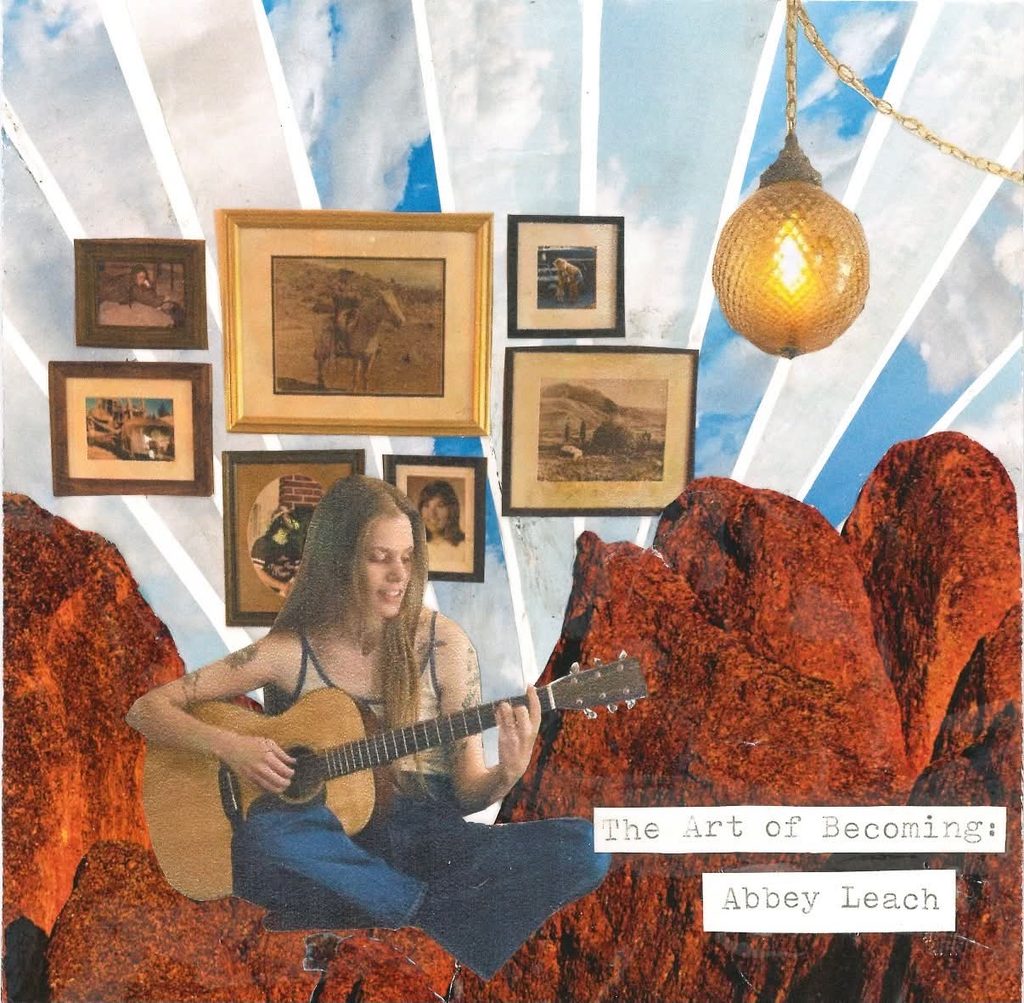
The Art of Becoming:
Abbey once imagined there would be a point when she would finally “arrive” as a musician, when she would know the work was consistently good. She doesn’t think about art that way anymore.
The album was originally going to be self-titled. By the time the record had taken shape, The Art of Becoming: fit it better. Its 11 original songs reach across nearly a decade of writing, from a song Abbey wrote at 16 to work much closer to the person she is now.
The track list isn’t chronological. Abbey considered lining the songs up that way, letting different periods of her life unfold in order, but musically it didn’t work. Too many slow songs fell together, and similar keys crowded each other. She built the final sequence around how the record actually feels from beginning to end.
The record was made at Cottonwood with Tom Frear. Abbey would begin with a scratch track of voice and guitar, then Casey built out the rhythm section, playing guitar, bass and drums across the album. Casey already knew her influences and how she heard the songs, so much of the arranging came easily. There were also songs he took in directions Abbey hadn’t expected, and she liked where they ended up. Alex Massa, Joey Rowland, Marcia Kenobbie and Antonio Vazquez, from Boise, also appear on the recordings.
Abbey Leach Album Release Show
On Saturday, Oct. 3, Abbey will bring The Art of Becoming: to the Custer Beacon from 7 to 9 p.m. Casey Shelden, Marcia Kenobbie, Alex Massa, Joey Rowland, Louis Umbarger and Lisa Young are billed to perform with her. The show is open to the public with a $10 suggested donation.
Abbey will have the full album on CD at the Beacon while the songs make their way onto streaming services one at a time. That matters for a record built partly out of the desire to keep these songs from disappearing. The first time she tried to preserve an era of her writing, she wound up with an eight-song teenage album she still wishes she could hear more clearly. This time, she gets to keep the record she meant to make
When I first heard Abbey in that backyard, I didn’t know about the Beatles books, the teenage album, Boise or the songs that had already been following her for years. I only knew I wanted to hear her again.
On Oct. 3, there will be 11 of them on a record she can keep.