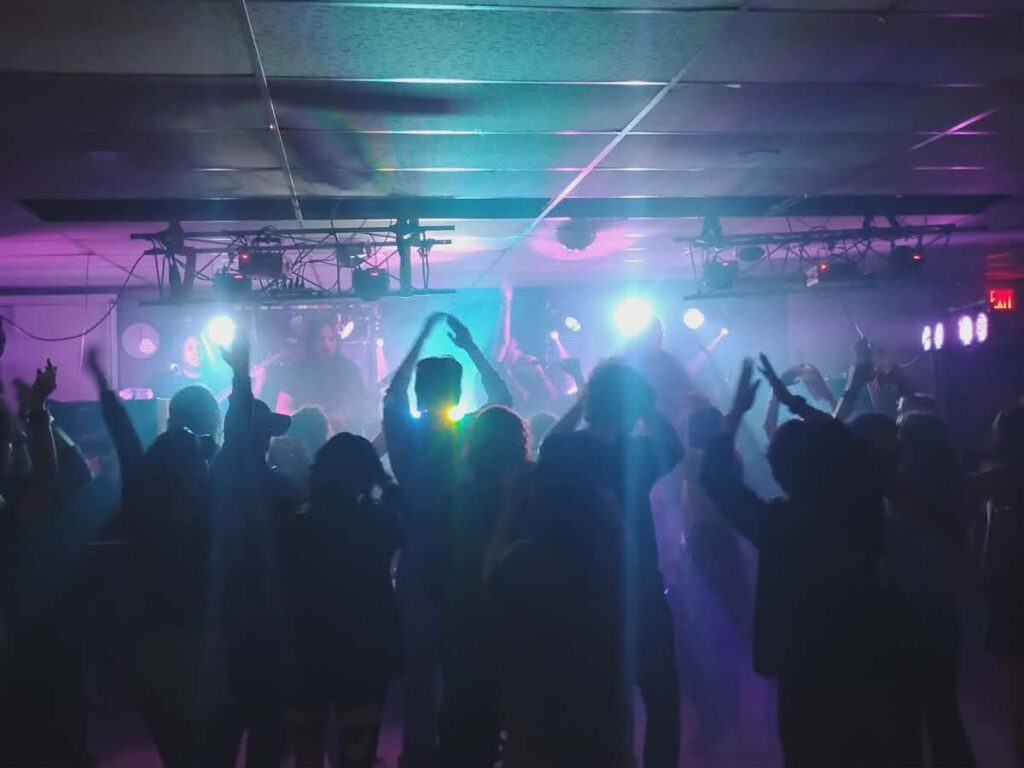
By the time doors open, most of the work is already done. The speakers are set, cables run, lights dialed in. Bands start to trickle in, shaking hands, getting a feel for the room. Outside, a few flyers are still taped to poles downtown, doing their job.
That part doesn’t happen by accident.
Rapid City has seen versions of this before, with underground shows surfacing over the years. A new group of local organizers and bands is picking that work back up, bringing DIY punk shows into a more consistent rhythm. Touring bands are starting to route through again, local lineups are filling out, and nights that used to feel sporadic are starting to feel a little more steady.
Some of that work has been coming from people like Ti Murphree. Murphree has been helping organize a run of shows in Rapid City, connecting with touring bands and building lineups that mix local and out-of-town acts. Two more shows are on the calendar this spring.
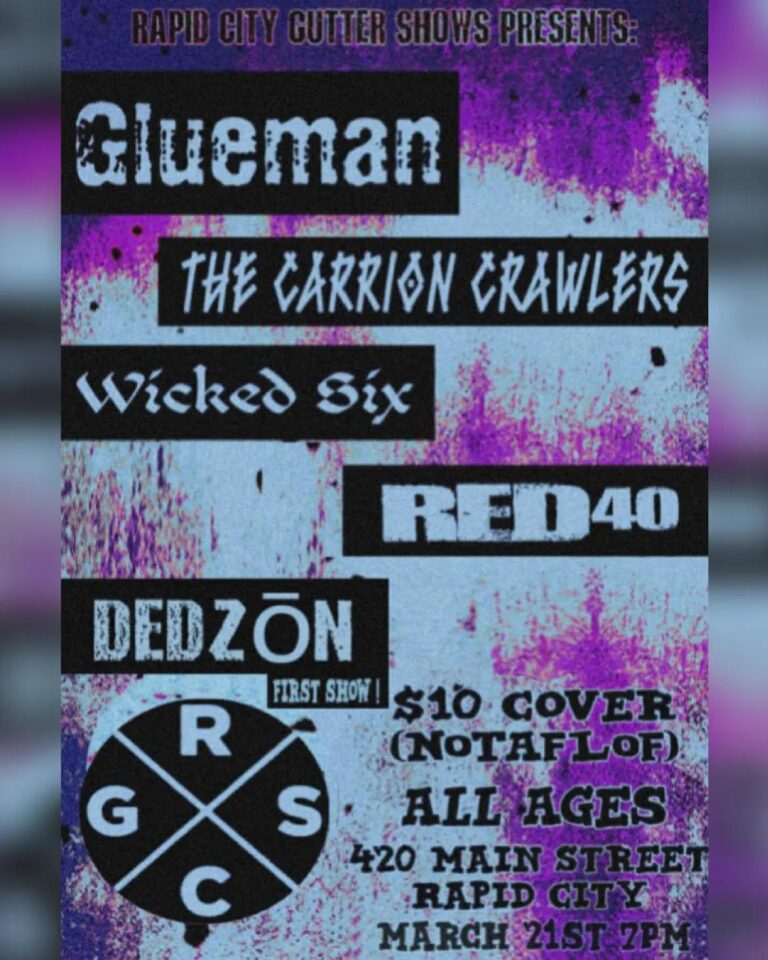
March 21 brings the Colorado band Glueman through town. On April 2, Minnesota’s ¡Radical Fun Time! makes a stop in Rapid City. And looking further ahead, a three-day stretch is planned for September 24 through 26, with around twenty-one bands expected to take part.
Like most DIY shows, these don’t come together in one clean step. Often it starts with a message from a touring band looking for a place to land between cities. From there, it’s a matter of finding a space, reaching out to local bands, and slowly building a full bill.
Murphree got pulled into it in a similarly loose way.
“We had two small speakers and a tiny mixer,” he said. “We decided to throw a show powered by a generator.”
It worked. So they kept going.
Now, the process repeats itself each time a new show takes shape. Flyers get printed at the library, usually in stacks of forty or fifty. They get passed out downtown, taped to poles, handed to businesses. Social media fills in the gaps, but the physical effort still matters.
“No promo equals no people at the show,” Murphree said.
Show days start early. Load-in begins around 11 a.m. with speakers, lighting, and sound equipment getting set and tested. Touring bands arrive in the late afternoon, doors open at 6:30, and music starts at 7. When the last set ends, the night doesn’t. The people putting the show together are usually the last ones out of the building, sometimes not until well after midnight.
The bands coming through aren’t routed by large promoters. Most of the connections are built the same way the shows are, through conversation, travel, and word of mouth.
“We talk to bands and make friendships,” Murphree said. “Then they tell other bands about us and word spreads that way.”
That kind of network takes time to build, especially in a place where many touring bands don’t automatically think to stop.
“A lot of bands don’t come through Rapid because they don’t know about the underground punk scene,” he said. “That’s why we try to be loud and book a lot of shows so everyone knows about it.”
The goal behind these shows isn’t complicated. They’re all-ages. They follow the longtime punk principle of NOTAFLOF, meaning no one is turned away for lack of funds. And they’re built to give both bands and audiences a place to show up and exist for a while.
“We just want everyone to have a good time,” Murphree said. “A place where they can come be themselves and not care about the world for a little bit.”
Rapid City has always had an underground current moving through it, carried forward by different groups over the years. What’s happening now adds to that, shaped by the people willing to do the work because they believe the music matters and that spaces like this are worth building.
That kind of thing doesn’t happen on its own, it takes people showing up to make it real.