Lost Cabin After Dark presents: Messiahvore 6-13-2026
Messiahvore put in some work on our little video to make it sound way better. Here’s an updated and improved version!
 Submit
Dispatches from inside the room. These are reflections from the nights we stood in the crowd, sat in the dark, leaned against the bar, or lingered after the applause. Not reviews. Not ratings. Just what it felt like to be there. The atmosphere, the small moments, the energy that doesn’t always make it into a calendar listing. Field Notes is our way of documenting the pulse of the Black Hills scene as it actually unfolds.
Messiahvore put in some work on our little video to make it sound way better. Here’s an updated and improved version!

Black Hills Art Beat grew out of a familiar frustration: trying to figure out what’s happening meant bouncing between posts, flyers, scattered calendars, and word of mouth …and still missing things. The goal wasn’t to build just another calendar, it was to create something that actually works.
More people are starting to use it each week, and that’s been the clearest signal that it’s heading in the right direction. At the same time, there are always things we can be doing to make it better. With a rare bit of downtime this felt like the right moment to walk through what makes BHAB different. Every part of the site has been built with intention to solve real problems that come up when trying to find or promote events. That approach makes it possible to create tools that are more useful than a standard calendar, even if they are not always obvious at first.
PROBLEM
Community calendars get bloated with too many irrelevant events, and social platforms show you things too late or not at all.
SOLUTION
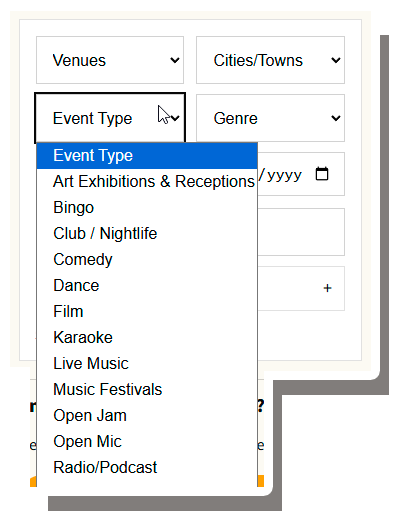
The filter lets you shape the calendar into what you actually want to see. Search for your favorite artist, narrow it down by town or venue, or turn off what you’re not interested in.


PROBLEM
Community calendars get bloated with too many irrelevant events, and platforms like Facebook either show you things too late or not at all.
SOLUTION
The filter lets you shape the calendar into what you actually want to see. Search for your favorite artist, narrow it down by town or venue, or turn off what you’re not interested in.
PROBLEM
I hear about something after it’s already happened, or I meant to go and forgot about it.
SOLUTION
You can add any event directly to your calendar so it’s there when you need it. And if you don’t want to keep checking, the Beat Drop shows up once a week with a clear look at what’s coming up.

PROBLEM
I see a name I don’t recognize, or one I do, but I can’t make that show and want to know if they’re playing again soon.
SOLUTION
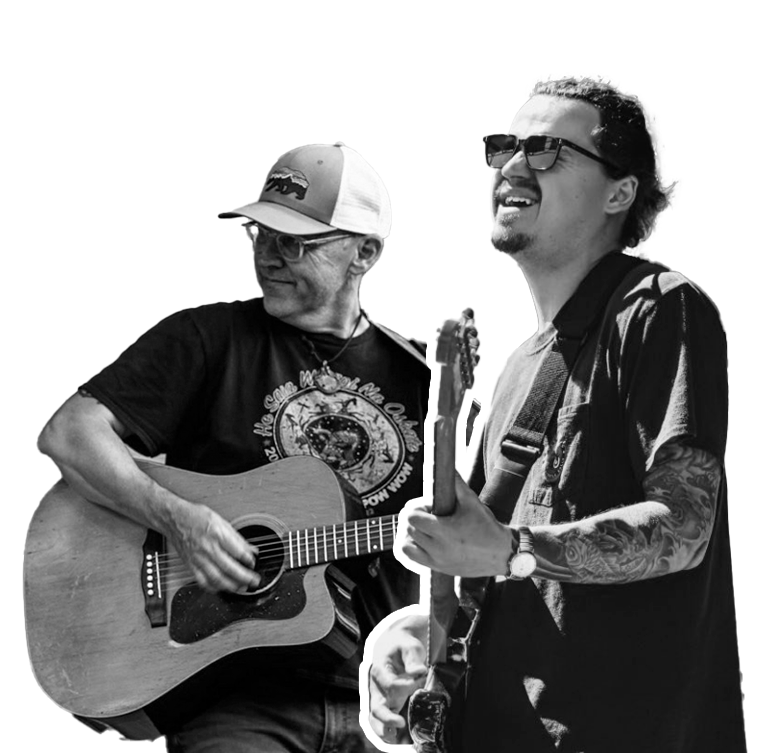
Artist profiles bring everything into one place. You can learn more about the artist, see what they’re connected to, and when they have something coming up, find where to catch them next.
PROBLEM
I want to know who’s playing at a few different places this weekend, but I don’t want to dig through each one separately to figure it out.
SOLUTION
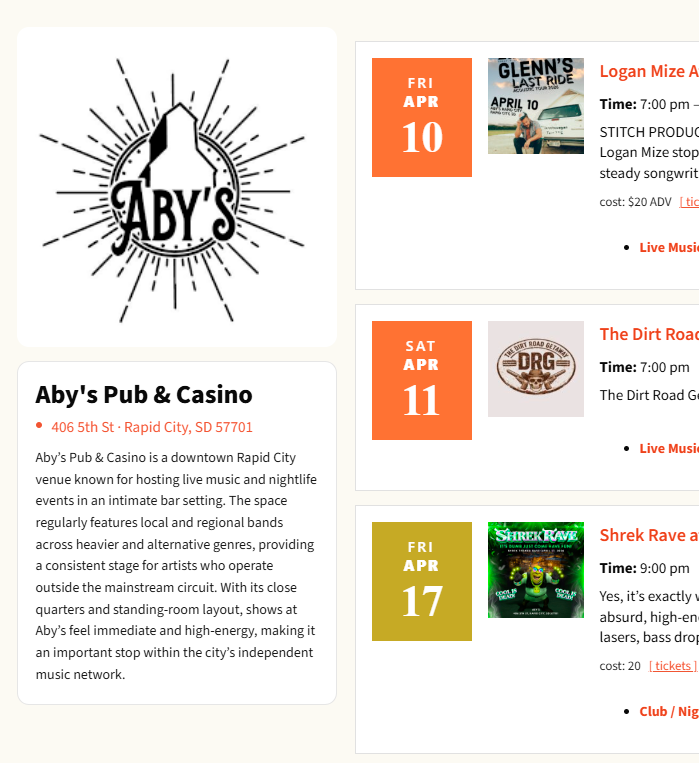
Quickly check what’s happening at each venue without bouncing all over the internet. See what’s coming up at each venue and move between them easily, whether you’re checking your usual spots or exploring somewhere new.
PROBLEM
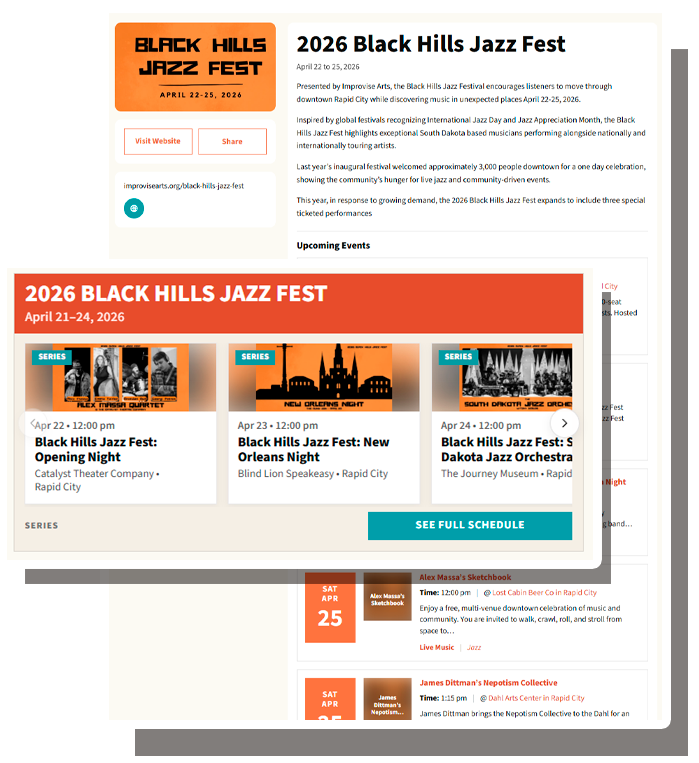
Big events like Summer Nights or Kool Deadwood Nights are spread out across multiple days and have separate event listings, and it’s hard to get a clear sense of what’s happening without piecing it together.
SOLUTION
Multi-day events and series are grouped together now so you can see the full lineup and decide where you want to drop in without digging through separate listings.
BHAB only works if people use it, share it, and if we build it together.
Even just visiting the site regularly helps more than you think.
If you do have the means to support it financially, that helps keep things moving too.
You can donate, subscribe, or sponsor events on the calendar. Those sponsored spots help push events forward and support the platform at the same time.
BHAB works when people use it to find things, promote what they’re doing, and show up for each other.
So that is a look at what makes BHAB different, and it is not stopping there. There is a growing backlog of ideas and improvements that are already in motion, all focused on making it easier to find what is happening and stay connected to it.
If there is something that feels missing or a problem you keep running into, that kind of input is always welcome. A lot of what is here exists because those gaps were noticed and worked through, and there is always more to build.
If you want to help push it forward, take a look at the “how can you help” section. Whether it is using the site, sharing it, or adding events to the calendar, it all helps make this a stronger and more useful resource for everyone.
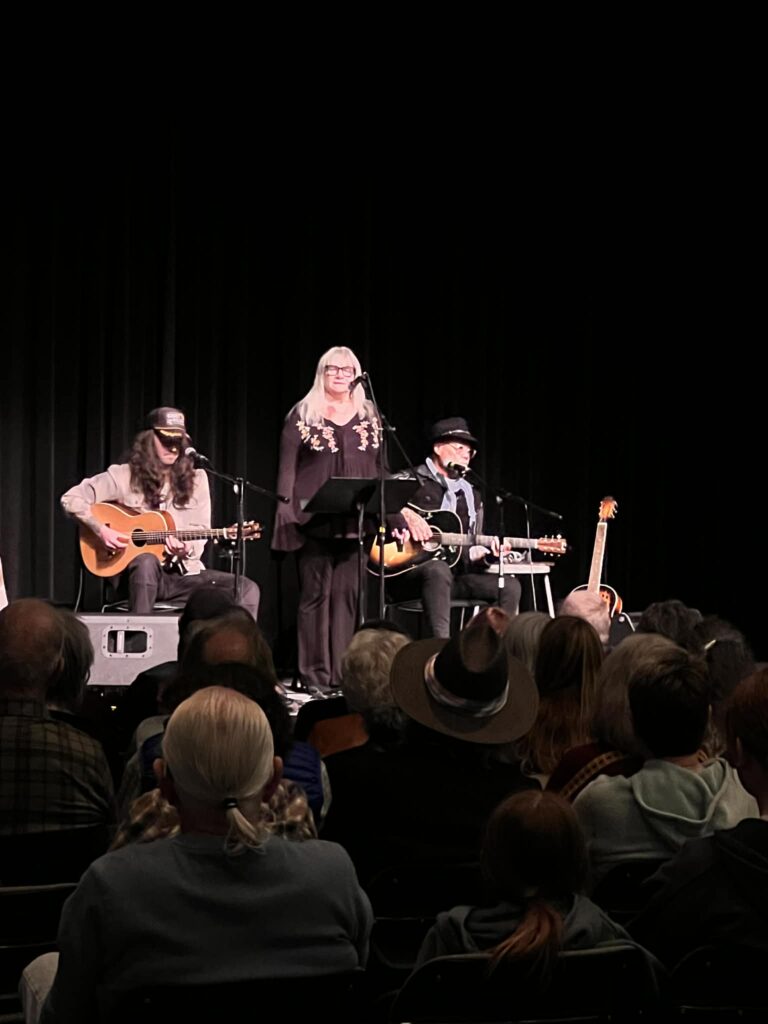
What started as an Emerging Artist showcase had to be moved into the main theater, with a full house turning out to see Johnny Hastings and Bob Fahey share the stage again. Over the course of the night, it turned into something a little bigger, with Deb Lux stepping in and the three of them rotating through sets, collaborations, and a final stretch that pulled the room to its feet.
Friday night at the Dahl we got to experience three Black Hills legends on stage together. Deb, Bobby and Johnny all shine brightly on their own, but there’s an extra spark when they’re performing together.
The evening started off with Bobby playing a mix of his own material and tasty covers. Hearing him in such an intimate setting, we could really hear the beautiful tones and timbres of both his voice and his guitar.
Before he ended his solo set, he was joined by Deb and Johnny for a couple of tunes and it was Deb‘s turn to shine with her beautiful, bluesy vocals.
Johnny‘s set followed with another fantastic mix of his originals and great cover choices. My personal favorites were Johnny’s latest single written for his Dad, and Blue Eyes Crying in the Rain, the Willie Nelson classic. Johnny put his own sauce on it, of course.
The evening ended with a super funky blues workout with Johnny and Bobby trading licks back-and-forth to bring the audience to their feet for the finale. The talent of these three is surpassed only by their hard work and humble hearts. I’m grateful to call them all my friend.
Saturday night at 707 pulled a different kind of crowd.
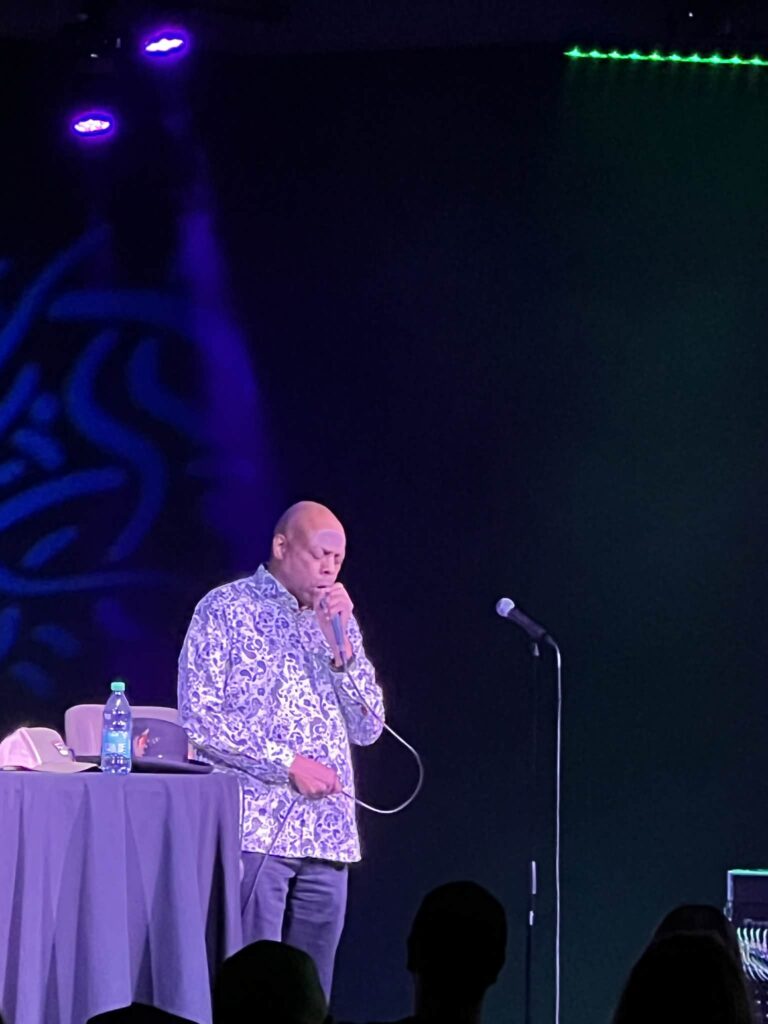
Michael Winslow is one of those names people already carry with them when they walk in. Most know him from Police Academy, or at least from clips that have been floating around for decades. The expectation is pretty fixed before he even steps on stage.
What happens once he gets going doesn’t really match that.
Instead of just running through familiar bits, he builds everything live. Sounds stack on top of each other, rhythms start to form, and before long it stops feeling like impressions and starts leaning closer to music. Not in a polished, produced way, but something assembled in real time, right in front of the room.
You can feel the shift when people realize what he’s actually doing. It takes a minute. Then it clicks.
The room settles in after that. Less about recognition, more about watching how far he can push it.
Later in the weekend, Johnny showed up again, this time at Aby’s.
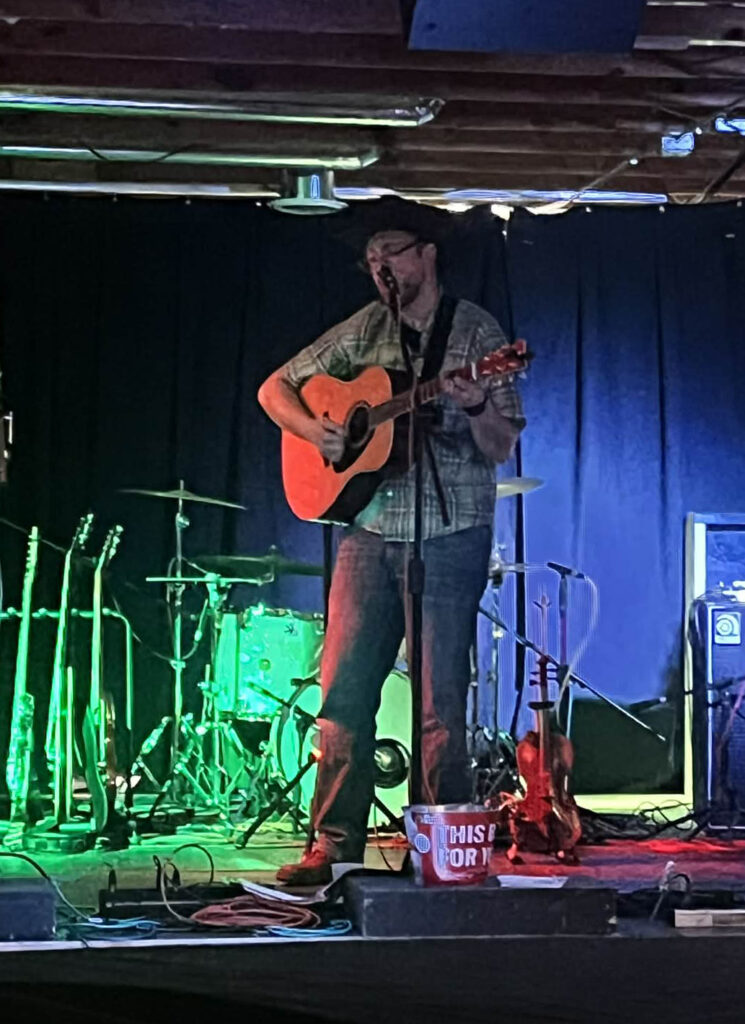
Different room, different pace. A ticketed show, a little more space to breathe, with his three-piece band behind him instead of a full crowd pressed into the seats.
The night opened with Aaron Niehaus, a songwriter out of Fargo, North Dakota, making his first swing through the Hills.
I ended up outside with him for a while, talking through what it actually takes to get into places like this. Travel, booking, trying to make the numbers work. He’s got a bluegrass band back home he’d love to bring out, but the cost of moving a full group makes that a harder jump than going solo.
This trip was part of feeling things out. Finding rooms. Meeting people. Seeing what might be possible if he comes back through.
Inside, Johnny and the band kept things steady, working through a set that felt a little looser than the night at the Dahl, but just as grounded.
Felid Notes from the weekend of March 18-23th, 2026
Over the weekend, notes started coming in from a few different corners of the Hills. A park show in Spearfish. A piano set at HayCamp. A Sunday jam tucked into the trees. Some of these we caught ourselves. Some came in from people who were there. If you end up somewhere we should know about, send us your notes and we’ll start working them into future Field Notes: info@blackhillsartbeat.com
(credit: Grant Ekroth)
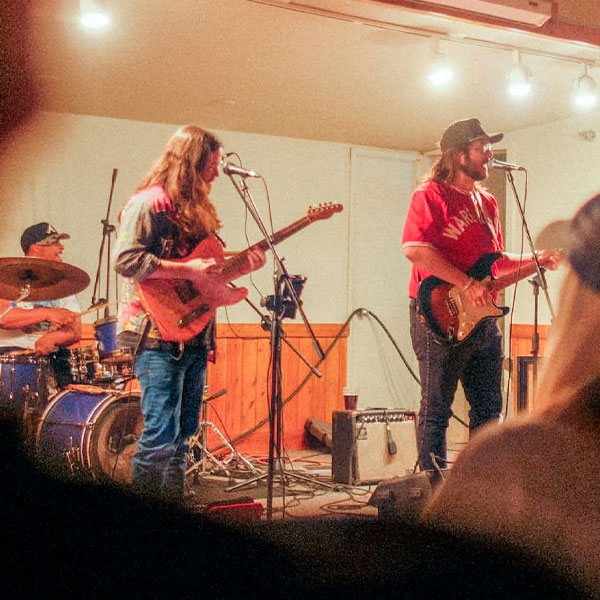
By the time Eddie 9V took the stage at the Spearfish City Park Pavilion, the space had already filled in. Beers from Crow Peak in hand, food moving out of Pit 14, people spread across the grass and under the shelter, easing into it as the afternoon rolled on.
Bodhi Linde opened the show earlier in the evening, though not everyone caught it. Grant was still at work and missed him, but the name kept coming up. Seventeen years old, playing anything with strings, already building a reputation for it. By the time Eddie stepped in, the tone had shifted into something looser, that mix of Southern soul and blues settling into a very unceremonious park setting.
The whole thing doubled as a benefit for the D.C. Booth Fish Hatchery, with a percentage of sales going back, though no final numbers had surfaced by the end of the night. Still, the crowd stuck around. Kids running, people drifting between the music and the beer line, the kind of show where no one’s really checking the time.
(credit: Orange Ficus)
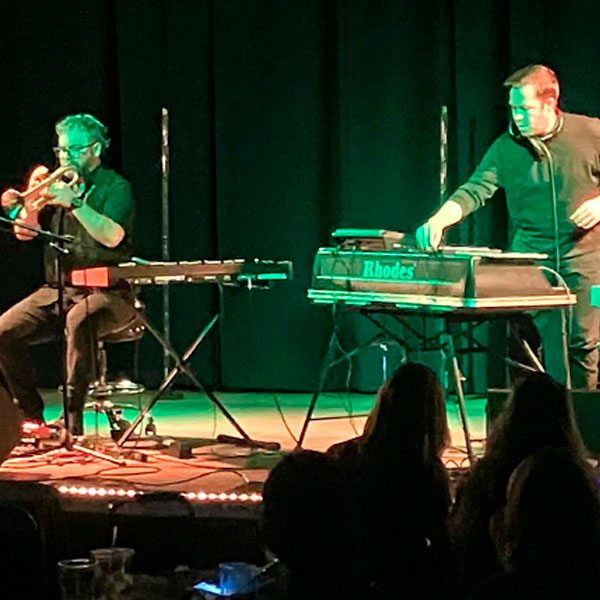
Sometime between 6:00 and 6:30, Phillip Daniel is already out of his seat. Not for show, just pulled up out of it for a split second before dropping back into the piano. The whole set moves like that. Loops, resets, small bursts of motion that never fully leave the ground.
The stage fills up fast. Drum pads, melodicas, trumpet, keys, percussion scattered everywhere. Alex Massa moves between them while Daniel holds the center, the two of them shifting from tight, controlled passages into something looser. At times it feels precise. Other moments, it feels like they’re just seeing what happens if they push it a little further.
They lean into that tension most when they let things drift. Strange tones, off-center rhythms, stretches that feel like they might fall apart before snapping back into something recognizable. And when they do come back, it’s quiet. Simple. The last song lands there, with Daniel easing into it and staying put this time.
It was a two-day slobberknocker of space grooves and pure rock power. From the first bite of Phat Bottom’s $2 tacos on Friday to the awarding of the championship belt to Continuum at Lost Cabin, fans of loud amps, unrelenting grooves, and pro wrestling had a lot to lock into this weekend in Rapid City.
SuperPlex didn’t just play a weekend of shows, they ran it like a wrestling card. Friday night set the bracket. Three bands entered, with Howling Embers getting knocked out of the title picture before Saturday’s final at Lost Cabin. Between sets, the tone stayed in character. Bands traded jabs, called each other out, and kept the crowd in on the bit. By the time Saturday rolled around, it wasn’t just another lineup, it felt like a main event. Continuum closed it out and walked away with the belt.
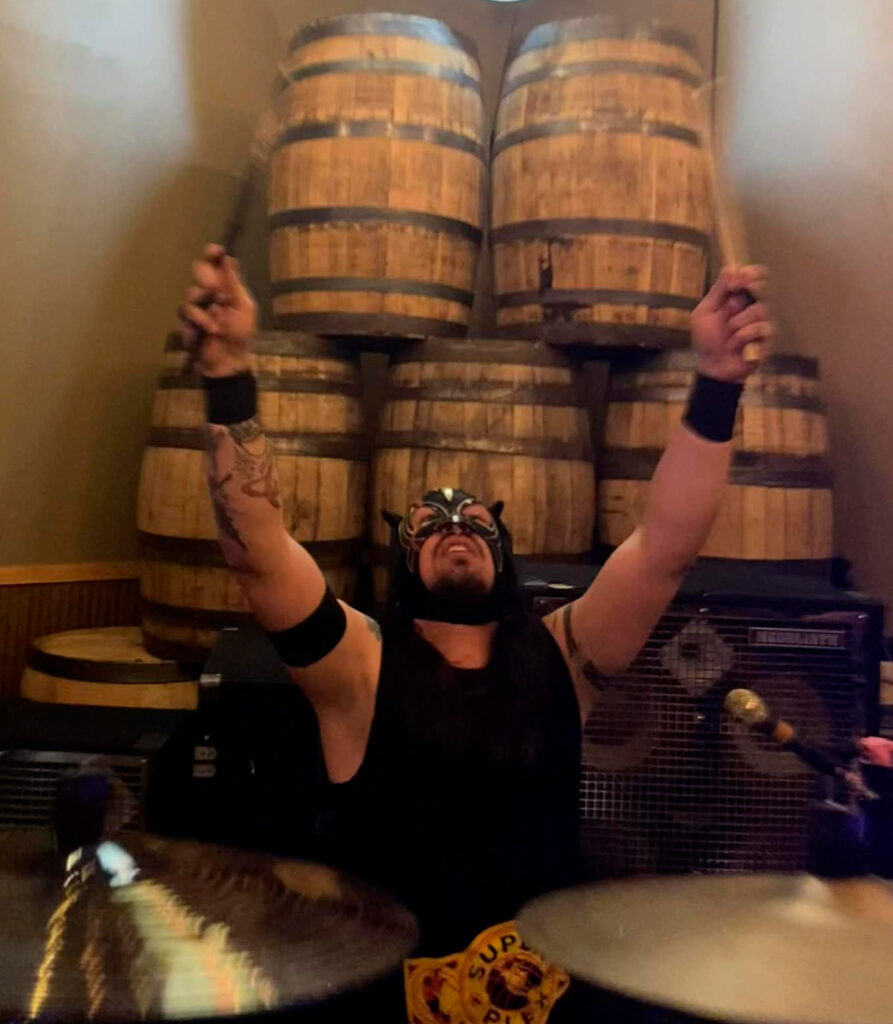
Photo Credit: Austin Kaus
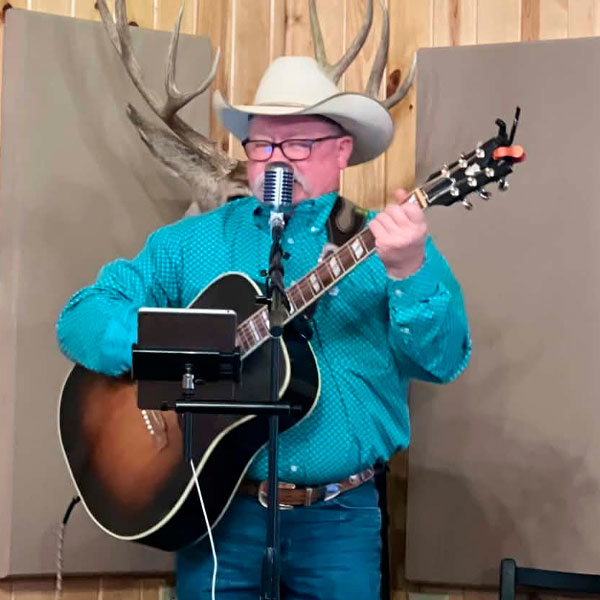
Brent Morris kept things rooted at the Gaslight on Saturday night, working through a set of classic country and western with a few newer cuts mixed in. The room stayed with him, not much movement, just people settled in and listening.
Kenny Rogers, Townes Van Zandt, Marty Robbins, The Eagles, Sonny James. The kind of set that doesn’t rush. Songs people already know, played straight and given time to breathe.
It felt a little like sitting around a chuckwagon fire. Cozy, good food moving through the room, and an audience that stayed attentive from start to finish.
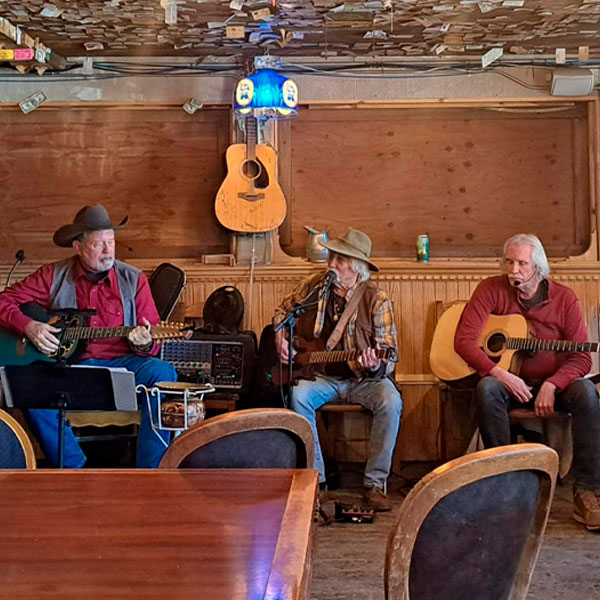
Sunday afternoons at Moonshine Gulch have a way of settling into themselves. By the time people arrive, the music is already going. Guitars passed around, names called out between songs, the same loose circle forming week after week.
Roger Severson, Don A, Mike J, Marvin Jones moving through sets, trading songs more than performing them. It’s less about who’s up next and more about keeping it going. People drift in and out, some there for the whole afternoon, others just catching a few before heading back down the road.
The building carries it all pretty easily. Dollar bills pinned overhead, notes and signatures covering the walls, the kind of place where no one’s trying to reset the room. Just adding to it.
There’s always more happening than this can hold. Shows we missed, rooms we didn’t make it to, things that started and ended without much notice. This is just what crossed our path this weekend. A few stops, a few sets, a handful of moments that stuck long enough to write down before they slipped past. If you find yourself out at something that sticks with you, send us your notes and we’ll keep building this.
Felid Notes from the weekend of March 12-15th, 2026
By Thursday night the room at Lost Cabin was already full.
People drifted between the taproom and the stage while MoonCats settled into their first songs. Some leaned into the music, others caught up with friends, and the whole place carried that rare feeling where a room of strangers somehow lands in the same mood.
That kind of energy tends to ripple outward. Over the next few days it showed up in very different places around the Black Hills.
Lost Cabin Beer Co. | MoonCats
Lost Cabin has quietly figured out a balance that a lot of venues struggle to find. The room was full Thursday night when MoonCats rolled through, but it never felt crowded in the wrong way. Service stayed on top of things, conversations floated easily through the taproom, and people seemed genuinely happy to be there.
Part of that comes down to how the space works. If you wanted to really listen, you could settle into the room with the band. If you wanted to catch up with friends, the other room gave you space to talk without stepping on the music. Some people were clearly there for the show, others were there to say hello to people they knew, and the two somehow coexisted without friction.
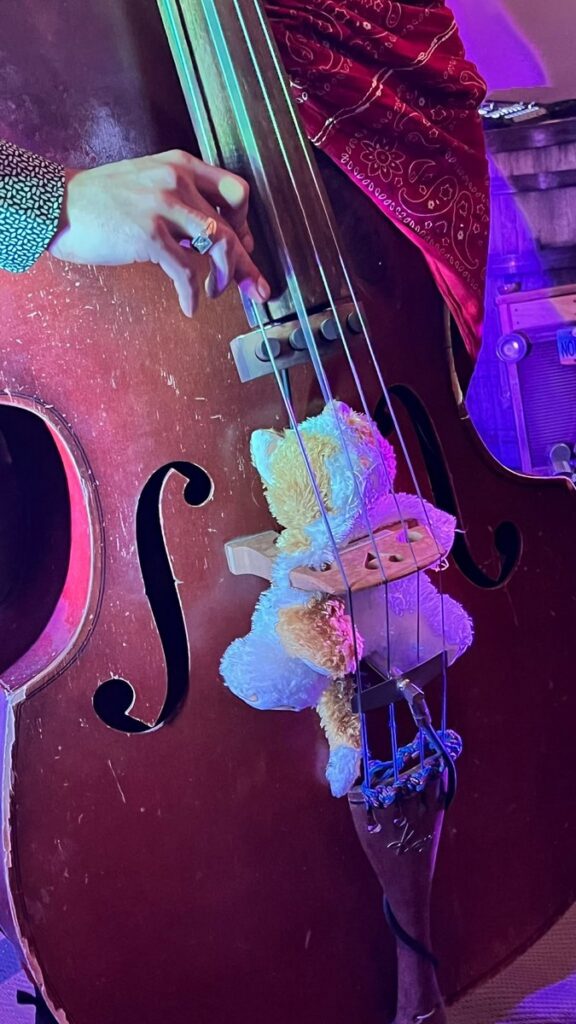
MoonCats’ self-described “Americonscious Campfire Folk” fits a room like that naturally. Their mix of banjo, upright bass, guitar, mandolin, harmonica, and washboard creates the kind of sound that feels less like a performance and more like a gathering. By the end of the night there were plenty of smiles, a few dancers moving around the edges, and the sense that people were exactly where they wanted to be.
The MoonCats will be back in the Black Hills playing at the Prairie Dog for their one year anniversary party on March 28th
Featured Artist | Pine Cone Bone Works
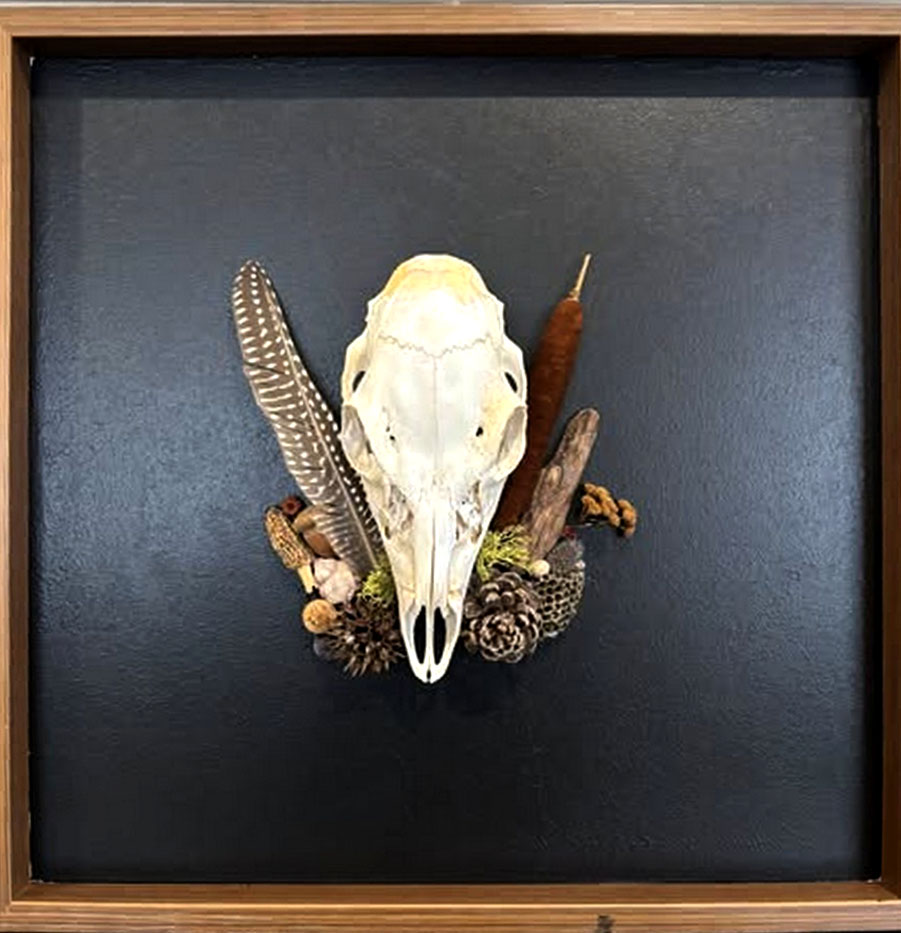
Lost Cabin also continues to treat the art on its walls with the same care it gives its music programming. The current featured artist, Pine Cone Bone Works, builds sculptural pieces using materials gathered directly from the Black Hills landscape.
Bones, feathers, pinecones, dried plants, and seed pods are carefully arranged inside shadowbox frames against dark backgrounds that let the textures stand out. The pieces feel part natural history and part quiet tribute to the place they come from, small compositions built entirely from what the land provides.
There is an art reception for Pinecone Boneworks at Lost Cabin on Sunday March 22nd from 2:00-4:00
Dahl Arts Center | Photography Showcase
The Dahl Arts Center was packed over the weekend for this year’s community photography exhibition, which invited photographers to explore the idea of “home” through images connected to the Black Hills and surrounding region.
The show drew roughly 250 submissions, with about 55 photographs selected for the gallery. With that many artists involved, the reception carried a lot of energy. Photographers, families, and friends filled the space as people waited to hear which pieces would receive awards.
One image that stood out was Russell Jensen’s Seeking Shelter, which took Best in Show. At first glance the photograph feels understated, but the longer you spend with it the more it reveals. Layers of trees frame the view toward a distant town while a lone figure moves down the tracks in the foreground. It’s the kind of image that rewards slow looking, quietly building its story the longer you stay with it.
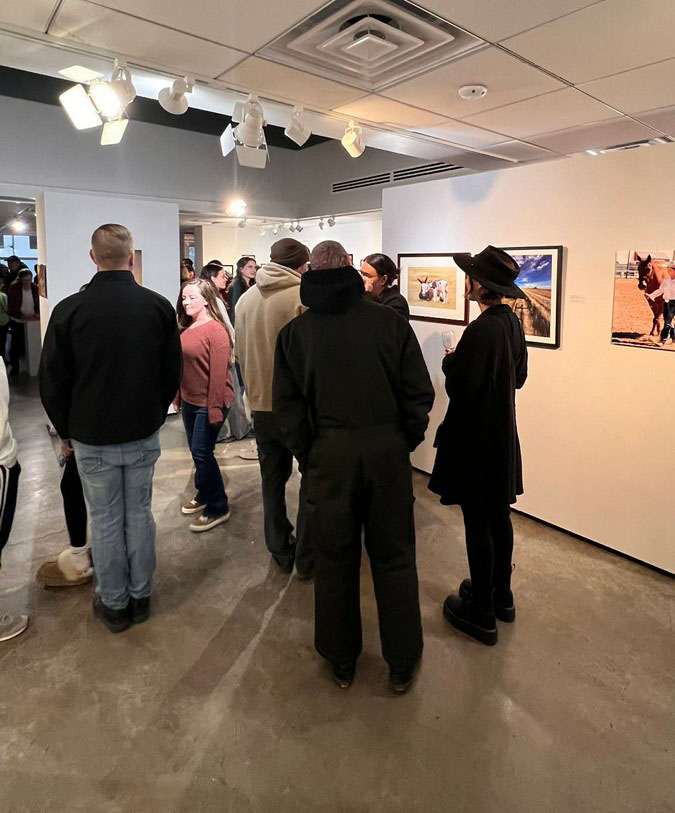
Home in Focus will be up at the Dahl Arts Center until May 2nd, 2026
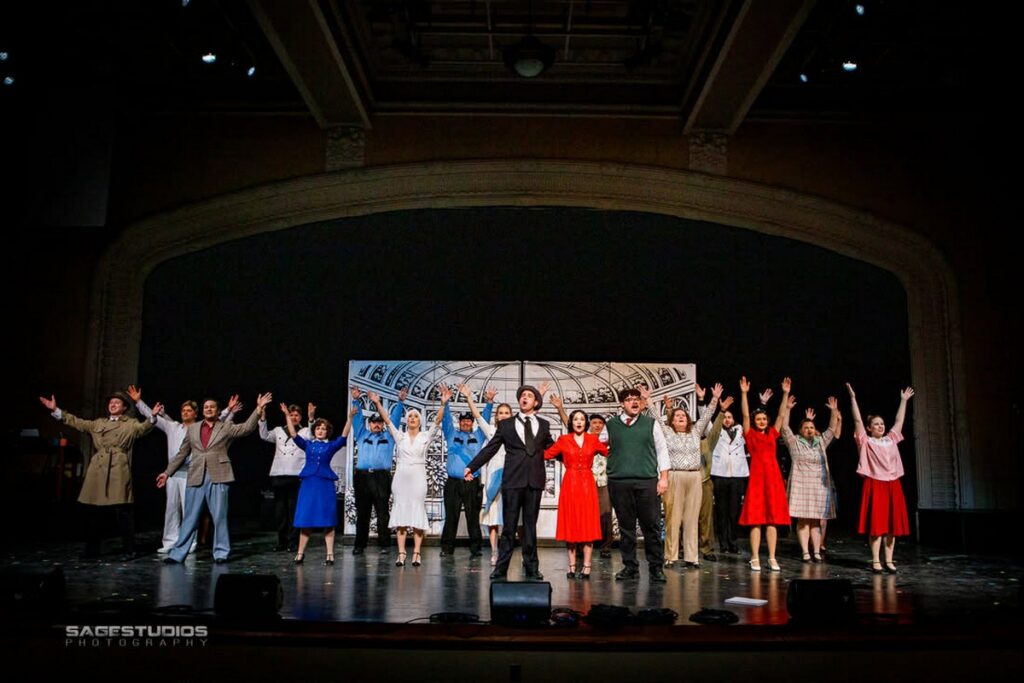
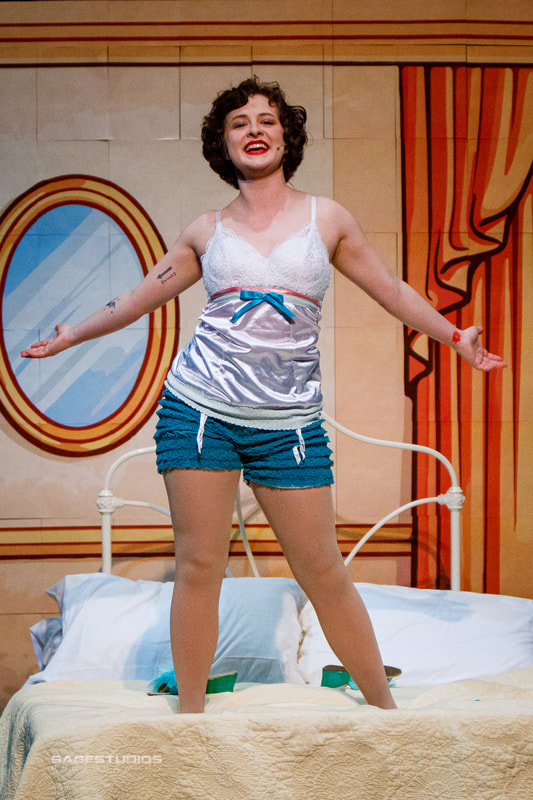
photos by Russell Jensen, Sage Studios
Black Hills Community Theatre | City of Angels
Sunday afternoon brought a different kind of performance with Black Hills Community Theatre’s production of City of Angels. What stood out most wasn’t a single performer but the ensemble itself. The cast worked as a complete unit, with voices blending powerfully in the large musical numbers while several performers could easily fill the auditorium on their own when the moment called for it.
The show’s concept adds another layer of intrigue. City of Angels flips between two worlds: the noir detective story unfolding inside a screenplay and the real-life Hollywood writer struggling to finish it. The production makes that contrast visually clear. The noir sequences live in black-and-white costumes and cool blue lighting, while the writer’s world shifts to warmer colors and brighter tones.
A live orchestra anchored the entire production, landing every transition and musical cue with precision.
Productions like this also highlight something remarkable about community theatre. City of Angels brought together 22 cast members, 15 people on the crew and production team, and a 14-piece orchestra. That’s roughly 50 people from the community working together to bring a single show to life on stage.
Several performances stood out along the way, including Dakota Morgan as Stine, Tom Powers as Stone, Leslie Hopton as Gabby/Bobbi, and Rose Lamoureaux as Donna/Oolie, whose voice and stage presence commanded the room. Dave DeChristopher also drew plenty of laughs as Buddy/Irwin, delivering just enough pompous flair to make the characters appropriately unpleasant while still providing some welcome comic relief.
City of Angles runs for one more week at the Performing Arts Center of Rapid City in the Historic Theater – for tickets visit https://app.arts-people.com/index.php?show=286499
MAUL & SLAGGG
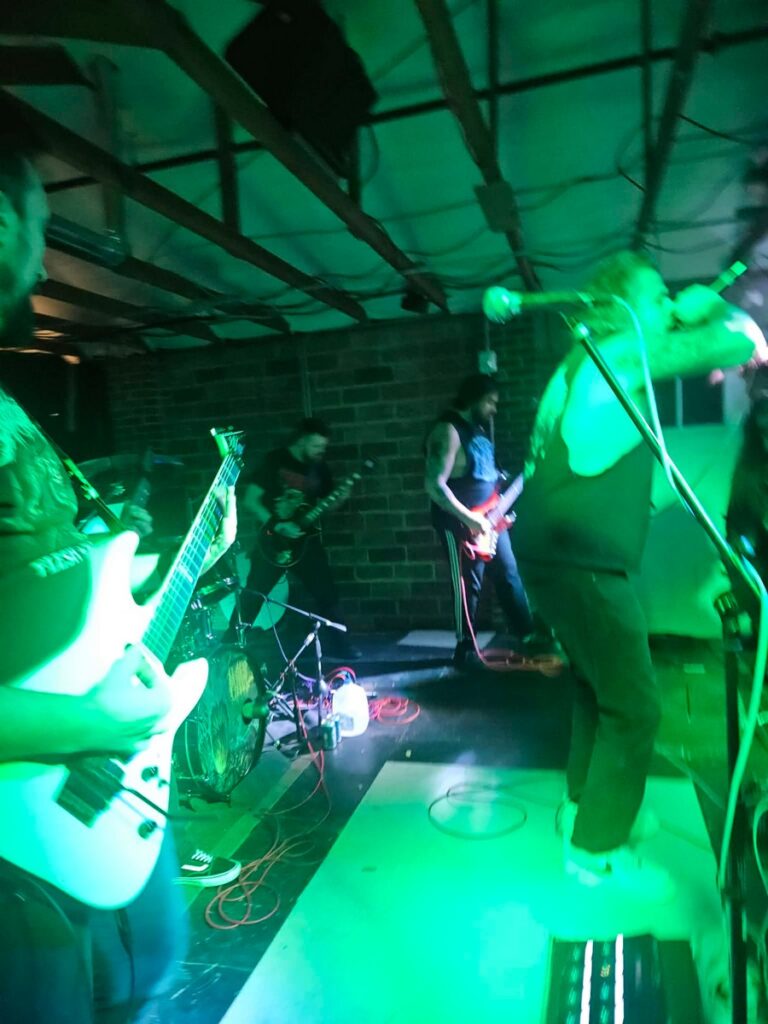
SLAGGG kicked the show off with a wall of pounding drums, thumping bass, and cavernous screams ripping through the room. From the first hit, the riffs were relentless, sharp, heavy, and built for chaos. The band kept the energy cranked the entire set, driving the aggression with ferocious vocals and a stage presence that demanded movement. The drums didn’t let up, the bass locked in like a war machine, and before long the pit was alive. If you weren’t already awake when SLAGGG started, you were by the time they finished.
After a quick beer break, MAUL stepped up and immediately cranked everything to eleven. The pit re-ignited the second they launched into their first track, fueled by the band’s thick, dark death metal energy. With three guitarists on stage stacked on top of the bass, the sheer weight of the riffs was massive, and the layered progressions gave the songs a brutal sense of depth. Their set had everything you want from a proper death metal show: crushing half-time sections built for headbanging, blistering fast shredding, guttural screams, and circle pit collisions that kept the floor in constant motion.
It was absolute chaos in the best possible way. At one point a kid even busted out a full backflip in the pit, which pretty much summed up the level of insanity in the room.
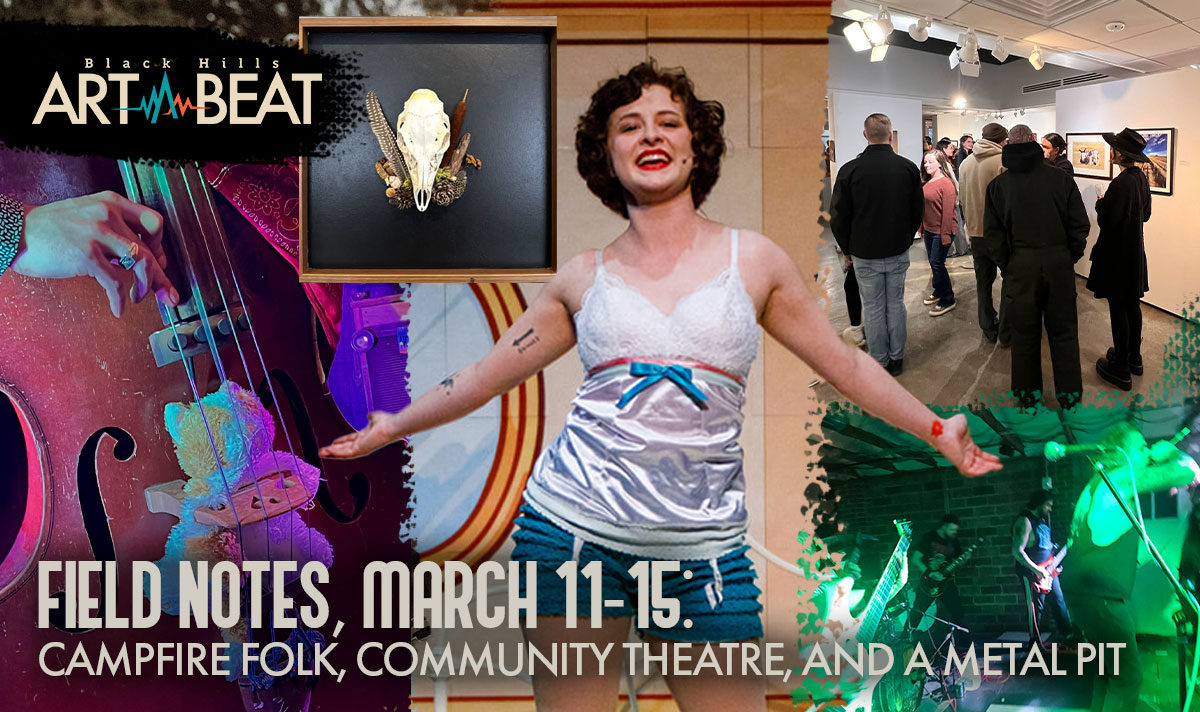
Across a single weekend you could move from a packed brewery listening to campfire folk, to a gallery filled with photographers reflecting on what “home” means in the Black Hills, to a theatre where fifty community members worked together to bring a musical to life, and end the night inside a roaring death metal pit.
Different rooms. Different audiences. Different sounds.
But the thread running through all of it is the same: people continuing to build spaces for art and showing up to share those moments together.
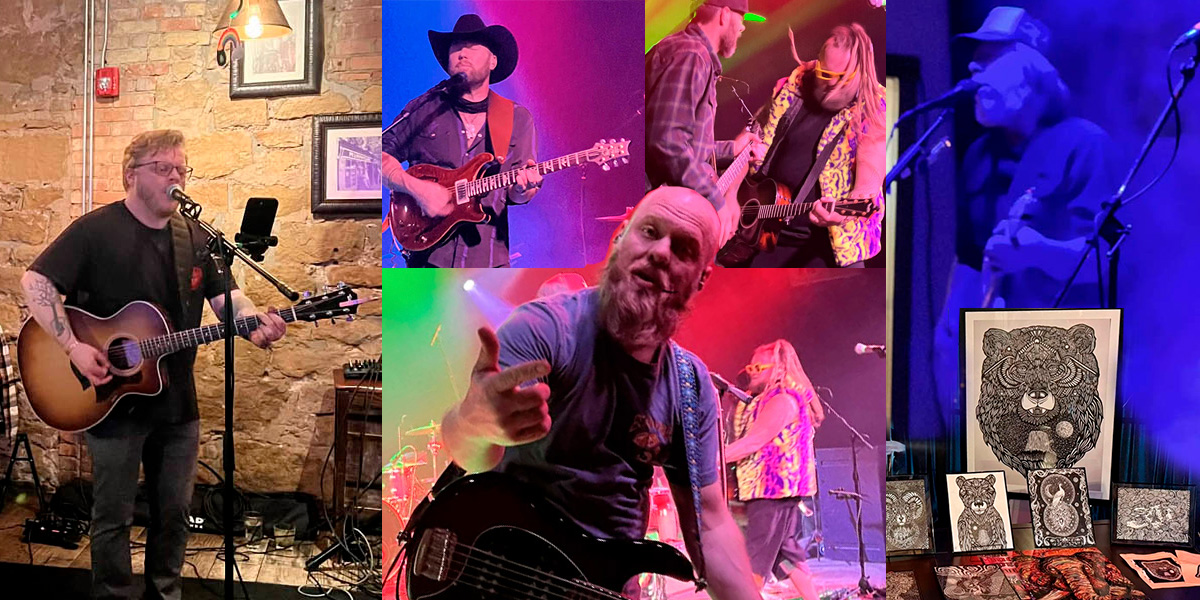
Murphy’s Pub | Zac Conger with Matt Buehner
Thursday night started at Murphy’s with Zac Conger, joined by Matt Buehner from Outside Kids. Murphy’s continues to be one of the best rooms in town for simply sitting with the music. The space invites people to relax. Conversations float around the tables, but the sound fills the whole room in a way that makes it easy to drift back into the songs whenever you want.
Conger’s set moved easily across genres. One minute it was The Fray, then Zach Bryan, John Denver, Tom Petty, and a few other unexpected turns along the way. His gravelly voice carried the whole thing comfortably, and for those of us used to seeing him behind a drum kit, hearing him step forward with guitar and vocals felt like a bit of a surprise reveal.
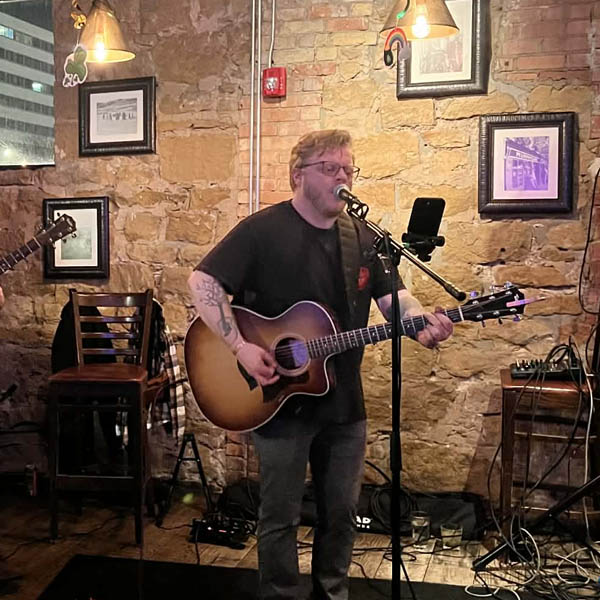
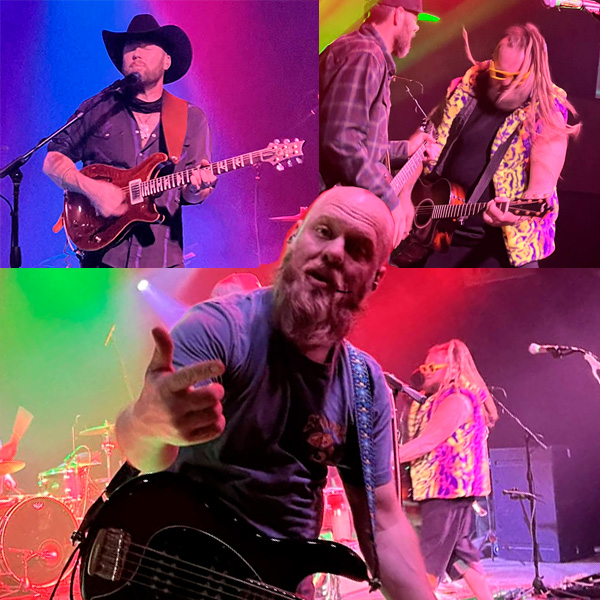
707 Sportsbar & Nightlife – Camp Comfort & Tuff Roots
Camp Comfort took the stage with the kind of energy that makes you wonder how any band is supposed to follow them. The groove is deep, the musicianship is razor tight, and the whole band plays with a level of confidence that comes from serious miles on the road. Zac Conger, who we’d just watched step forward as a singer the night before at Murphy’s, was back where many people first knew him — behind the drum kit — pushing the whole engine forward.
Tuff Roots closed out the bill with the kind of roots-reggae sound that has been helping them build momentum across the region. Based in Sioux Falls, the group has been working its way onto festival stages like Sioux Falls JazzFest and Saturday in the Park, carrying a style that blends classic reggae rhythms with touches of soul, rock, and jam-band improvisation. Saxophone lines and melodic guitar parts give their songs a warm, layered feel, anchored by the steady bass grooves that sit at the center of the genre.
Abys | Speed City Demons & Dew Claw
Saturday night was back to familiar territory catching Speed City Demons, who remain one of the most reliably greasy rock bands in the local lineup. Their sound leans into gritty garage rock with a sense of humor about itself, and the band always manages to sneak in strange little sonic details that keep things interesting. This time it was the occasional synthetic flute tone floating over the top of the guitars, a weird but somehow perfect flourish.
The night also featured the performance debut of a new band called Dew Claw. Their sound landed somewhere in that grungy, off-kilter pocket where things feel a little loose and unpredictable in the best way. At times the lead vocals even carried a bit of a David Byrne tone, which gave the set a slightly quirky edge that stood out right away.
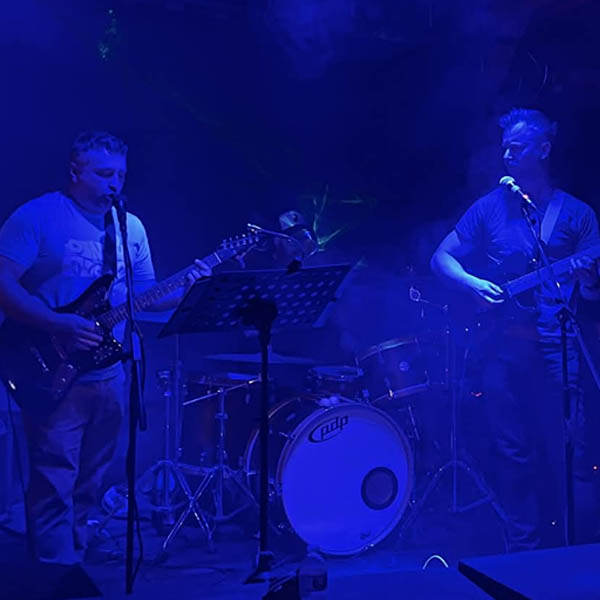
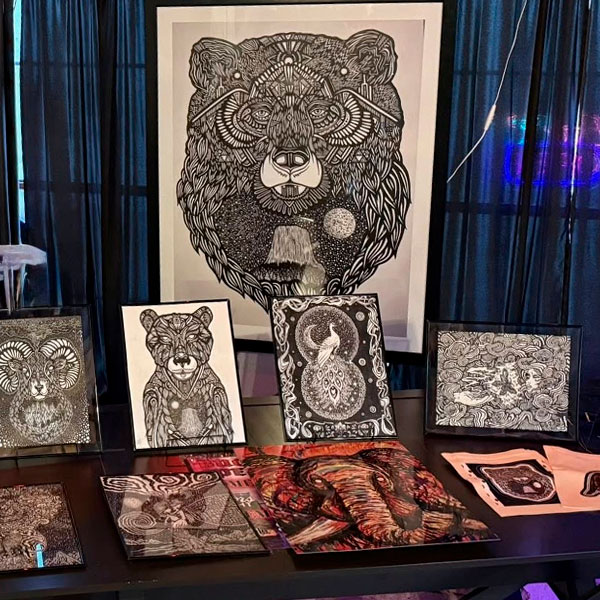
Black Hills artist Jehle Kae | Abys
While I missed the official opening Friday night, I did get a chance to spend some time with the new artwork currently hanging at Aby’s by Black Hills artist Jehle Kae. The show features intricate black-and-white pen drawings inspired by the landscapes and wildlife of the region, with compositions built from dense layers of line work that invite you to slow down and study them for a while.
Jehle describes the work as being shaped by both the land and personal experiences of grief and transformation. The pieces carry a quiet intensity up close, and the show will remain on display at Aby’s through April 3 for anyone who wants to spend a little time with it.
Weekends like this are a good reminder that the Black Hills scene isnt stagnant, stale or boring. One night you’re sitting back with an acoustic set, the next you’re locked into reggae grooves, and by Saturday you’re watching a brand new band take their first crack at a stage. Different rooms, different sounds, but the thread running through it all is the same: Artists showing up, trying new things, and keeping the local scene moving forward one night at a time.
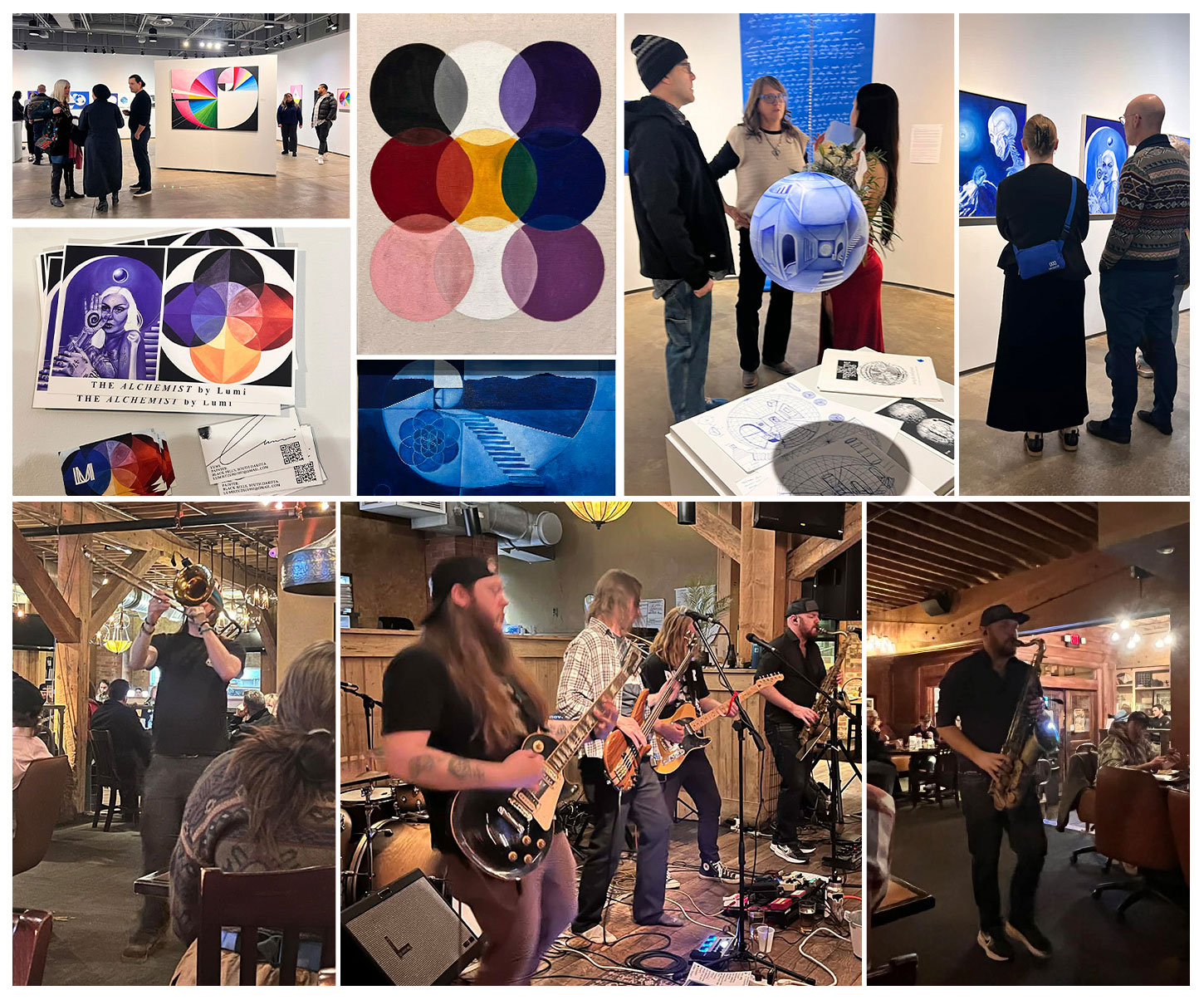
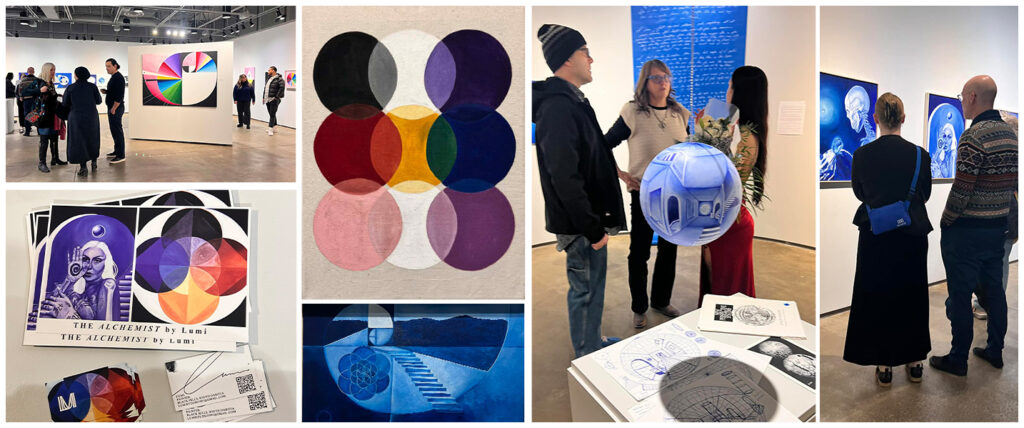
We arrived around 5:30 thinking we would make a quick pass through the gallery, but the room was full and engaged, younger than I’m used to seeing at art openings, and it slowed us down almost immediately. The exhibition is physically divided, with one half displaying La Période Bleue and the other La Période Lumière, and you feel that division as you move through the space.
On the blue side, the symbolism begins to reveal itself the longer you stand there; A skeleton, the moon, a chair tipped over mid-scene. Someone asked about the overturned chair during the talk, and Lumi explained it as the moment to get up and get going. The skeleton, which most of us are conditioned to read as death, she sees as her higher self moving through the challenges she presents in the work. The paintings feel narrative and dreamlike, as if time and memory are folding in on themselves, and she is inviting you to follow the thread she has been tracing.
When you cross into the light series, the literal symbols fall away and the work becomes more structural. Geometry and color take over. Circles expand into layered sacred forms, and pigments blend into new variations that shift depending on what surrounds them. She spoke about how color carries different meanings across cultures and how those meanings change depending on proximity, and I began noticing hints of those references in the compositions. Subtle nods to identity. Small cultural echoes embedded in the palette rather than spelled out in imagery.
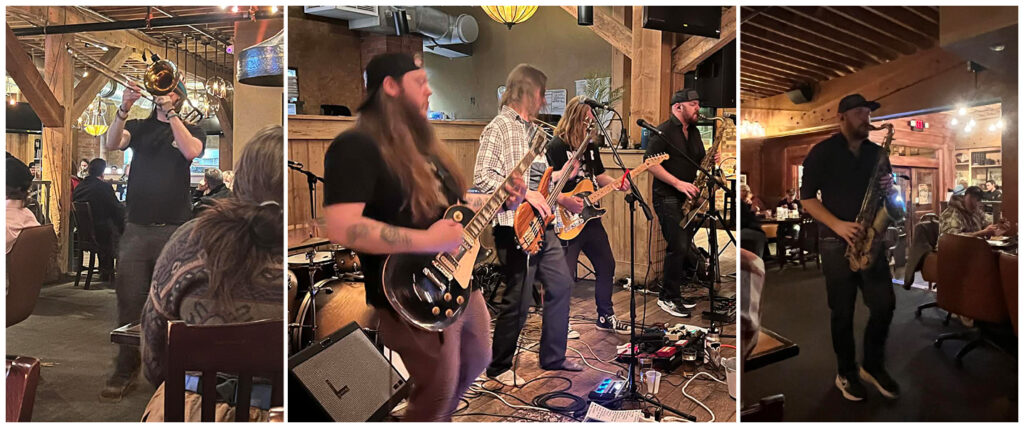
We popped down to Murphy’s to catch Float Like a Buffalo out of Denver, a six-piece band built around high-energy rock layered with funk, jam grooves, and a bold brass section.
The place was full, and more importantly, it was paying attention. That alone felt good. Too often you see a band working hard in a corner while conversation hums louder than the music, or worse, playing to empty space. This wasn’t that. People were dancing near the front, others stayed at their tables tapping their toes, and when songs ended the applause came quick and loud. The band had the room, and the room gave it right back.
We stayed for a set and a half. They started at 9:00, which is late for my mid-forties bones to begin a night, but some shows earn that extra hour. I was home by 10:30 and still glad I went.
The horns were the heartbeat of the whole thing. They stepped off the stage more than once, weaving between tables and closing the distance between band and crowd. During “Proud Mary,” they stretched out the slow opening and let it wander through the bar, almost convincing us that was all we were getting. They wrapped it up just before the loud, raucous second half, and we looked at each other like, that’s it?
Then the horns climbed back onto the stage.
“Are you ready?”
They took a breath and slammed into the second half of the song and the place erupted. It was the kind of playful misdirection that only works when a band understands timing and trust. They knew exactly what they were doing
Valentine’s Day is usually packaged and predictable.
Saturday wasn’t.
It was a night of finding things. Of slipping into rooms that feel like secrets and realizing Rapid City is more interesting than it gets credit for.
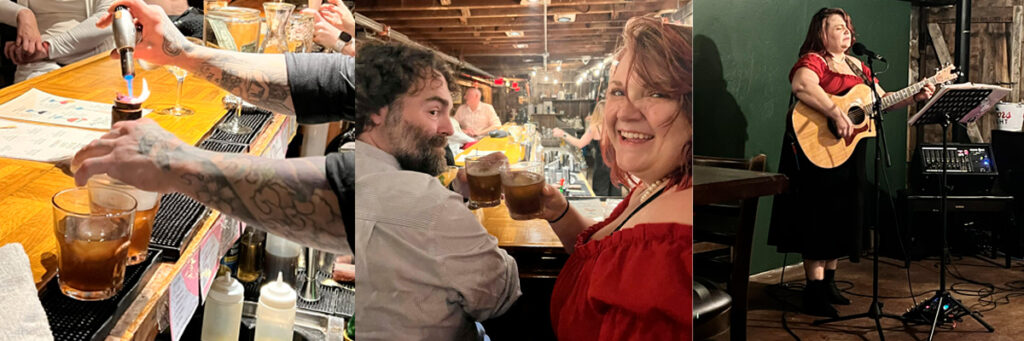
o get to The Blind Lion Cocktail Lounge, you have to intend to go there. The entrance is discreet, the room is tucked beneath Murphy’s, and once you are inside it feels removed from the rest of downtown. The setting lends itself to careful listening.
Elaine Romero-Douglas’ performance met that space perfectly. Her voice is powerful and carries real weight, yet she manages to sound beautiful, strong, and vulnerable at the same time. There is no sense of overreaching or theatrics. When she leans into a lyric, the room responds.
Her original songs move between reflective and mystical, often with a thread of humor that keeps them from drifting too far into self-seriousness. On Valentine’s Day, that range felt appropriate. Love songs do not all sound the same, and she does not treat them that way. Some pieces ache quietly, others shimmer, and a few catch the audience off guard with sharp wit.
Her choice of covers was equally thoughtful. Rather than reinventing familiar songs for the sake of novelty, she honored what made them resonate in the first place while still bringing her own tone and restraint to the performance.
The result was an evening that felt intimate in a way that was earned rather than manufactured, like you had stumbled into something you were not quite supposed to know about.
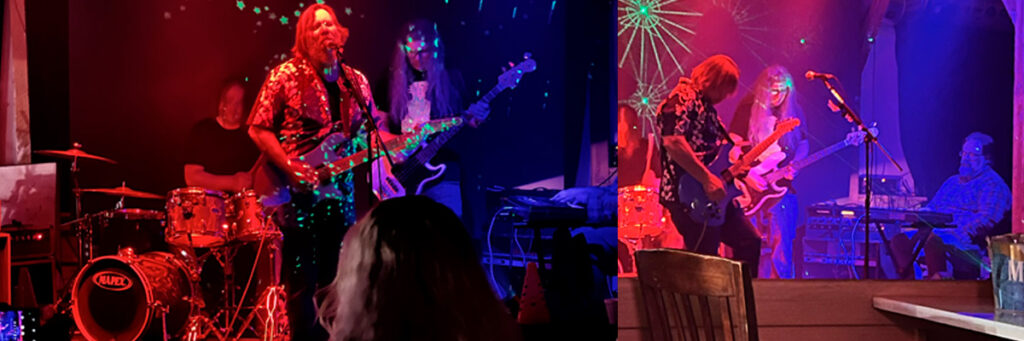
ater in the evening, the scene shifted to Aby’s, where Speed City Demons brought a very different kind of energy. They describe themselves as Greazy Original Blues Rock, and the label fits. The guitar work is thick and textured, the rhythm section is steady without being rigid, and the band gives its songs enough room to stretch without losing structure.
What stood out most was their chemistry. They are clearly comfortable with one another, which allows the music to breathe. Solos expand and then resolve naturally, and the transitions feel lived in rather than rehearsed to exhaustion.
The crowd was lighter than the quality of the band might suggest, but that is part of what made the night feel rewarding. Aby’s is not hidden, but it often feels that way to people who do not cross that invisible Fifth Street boundary. Those who do are usually rewarded with consistent programming and a stage that supports serious musicianship.
The band leaned into the Valentine’s theme with humor, tying their songs back to love and heartbreak without taking themselves too seriously. It was playful without being gimmicky, and it gave the night a sense of cohesion rather than novelty.
If Elaine’s set felt inward and deliberate, Speed City Demons felt expansive and kinetic. Both were strong in their own way, and both are reminders that Rapid City’s music scene rewards attention.
You just have to be willing to look for it.

