A reunion at 707 Nightlife and a new documentary at the Dahl Arts Center celebrate the scene that transformed Rapid City’s DIY music culture.
This weekend, more than a dozen bands will take the stage at 707 Nightlife for what organizers say will be the final Rapid City Punk Rock Reunion. At the same time, the Dahl Arts Center will premiere the first episode of Who the F** Wants to Play in Rapid City, SD?*, a documentary exploring the history of the Rapid City punk scene.
For decades, it all existed in memories, old photographs, cassette tapes, and photocopied flyers. This weekend, the reunion and documentary bring those stories back into public view while inviting a new audience to experience an influence that reached far beyond the bands that first built it.
When I first started digging into this story, I expected to write about a reunion concert. Instead, nearly every conversation circled back to the same idea: this was never just about the music. It was about the values the music carried with it.
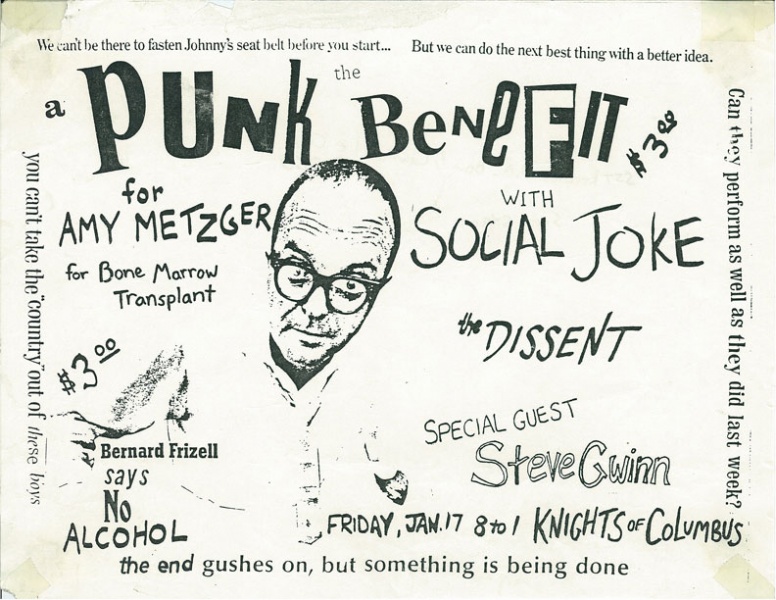
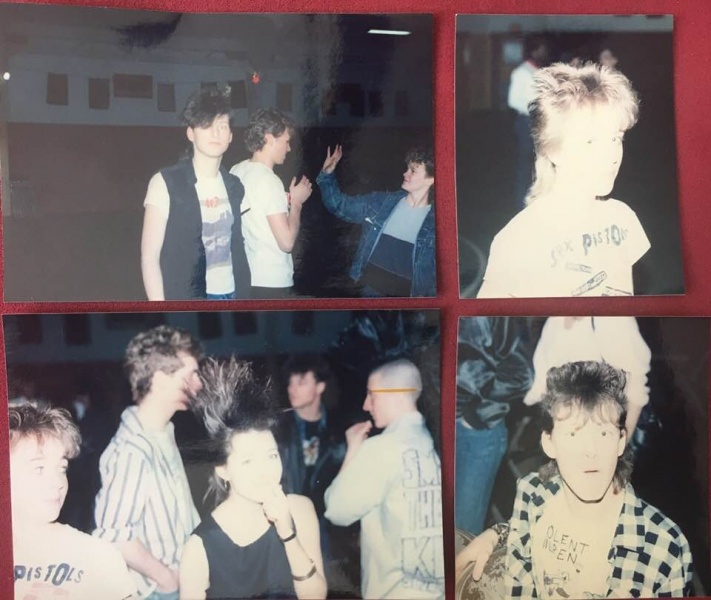
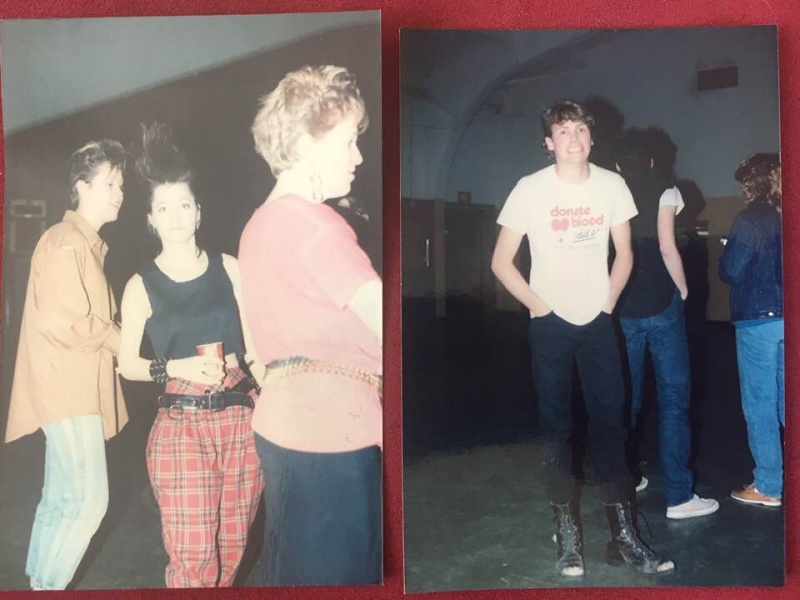
If there is a moment when Rapid City Punk found its footing, many people point to a benefit concert held in January 1986. Stevens High School student Amy Metzger had recently been diagnosed with cancer, and local bands Social Joke and Dissent joined fellow musician Steve Gwinn to organize a fundraiser at the Knights of Columbus Hall. For many who were there, it was the first time Rapid City’s underground music community saw itself as something larger than a handful of scattered bands and friend groups. Many of the people who were there describe that night as the beginning of a culture that expected people to look out for one another.
Troy Zoller remembers the night vividly. As a founding member of Dissent, one of the bands that organized the benefit, he was among the musicians who watched something unexpected happen as the crowd filled the Knights of Columbus Hall.
“We all came back after that show, and we were just high as hell,” Zoller recalled. “That was amazing. Let’s do it again.”
Today, Zoller describes the benefit as an “icebreaker” that brought people “out of the woodwork.” Looking back, he believes it was the first time many people realized they weren’t isolated groups of musicians and friends, they were part of a something.
I stumbled into the punk scene about a decade after the Amy Metzger Benefit, when it had already become part of the fabric of Rapid City. Looking back, punk wasn’t the music that defined my group of friends, It was the net that caught us as we fell through the cracks. We were the kids who didn’t quite fit into the established circles at school, and punk shows became one of the places where we found each other. Only years later did I realize that our experience wasn’t separate from the story Zoller was telling, it was a continuation of it.
Zoller sees that spirit continuing today, even if it looks different than it did in 1986. He says younger generations don’t need to recreate it exactly as it was or treat it with reverence. Instead, he hopes they build something of their own while carrying forward the values that made it meaningful in the first place.
“A lot of what we tried to focus on was not so much the music, but building a better person,” he said. “Encouraging each other to be better people through community.”
Long before social media made promoting independent music simple, Rapid City’s punk scene survived on a network of people willing to do the work themselves. Shows spread through word of mouth, hand-drawn flyers, photocopied zines, and college radio long before a Facebook event or Instagram post could reach hundreds of people overnight.
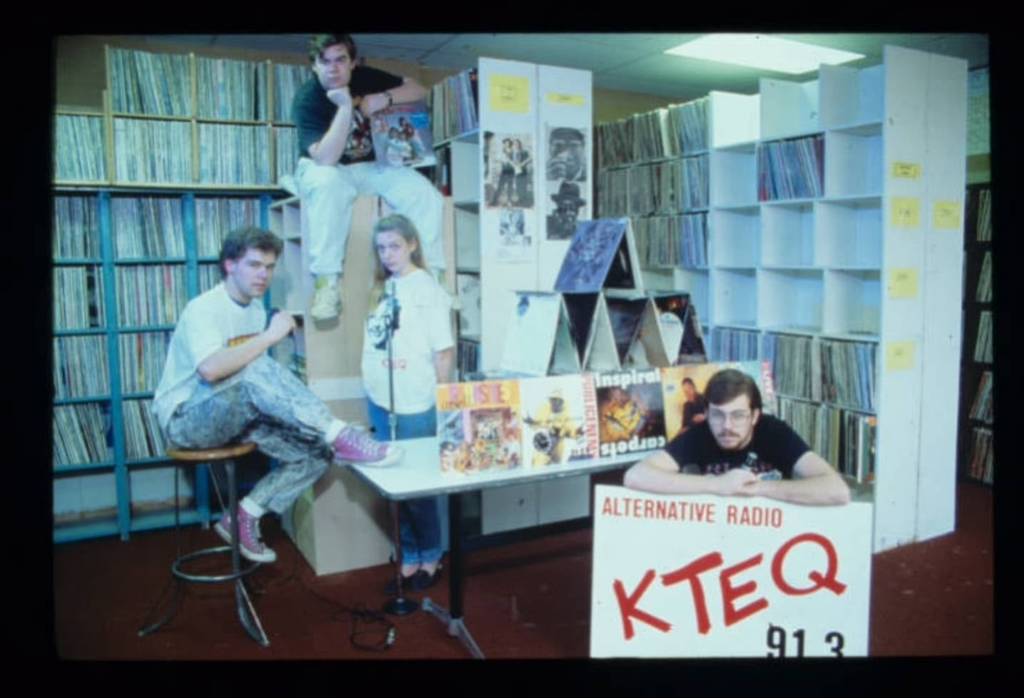
At the center of that network was KTEQ, the student-run radio station at the South Dakota School of Mines & Technology. For many young musicians and fans, it was the first place they heard bands that rarely reached western South Dakota. The station became both a classroom and a connector, exposing listeners to underground music while helping local bands discover a wider world beyond the Black Hills.
Long before social media, organizing a punk show meant doing nearly everything yourself. Bands were discovered through KTEQ or by word of mouth. Flyers were designed by hand, photocopied, and taped to telephone poles. Promoters borrowed sound systems, found places for touring musicians to sleep, and turned church halls, recreation centers, rented buildings, coffee shops, and basements into temporary venues. Every successful show depended on people willing to do the work because nobody else was going to do it for them.
As I talked with Troy, I kept coming back to one question: why Rapid City? Why did an isolated city in western South Dakota become a place that touring punk bands sought out? Part of the answer was geography. Rapid City was large enough to sustain a scene but remote enough that bands crossing the Northern Plains had relatively few places to play. Just as important was the reputation local organizers built. If a touring band made the trip, they knew someone would find a venue, put on a show, and probably offer a couch for the night before the van rolled toward the next town. That reputation spread quickly. Over the years, Green Day, Operation Ivy, Fugazi, Social Distortion, The Offspring, At the Drive-In, and many many more nationally recognized acts all made their way to Rapid City.
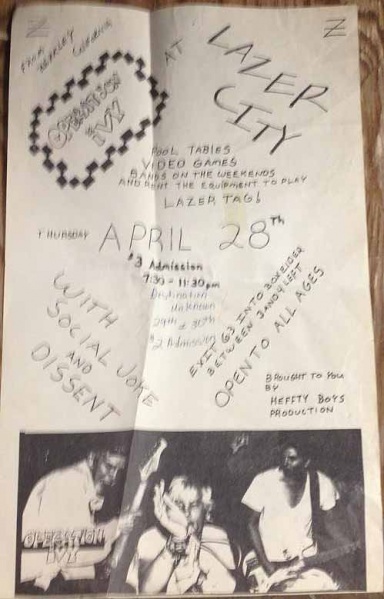
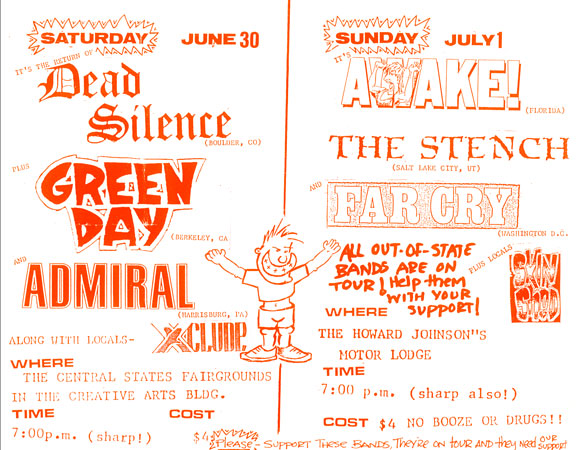
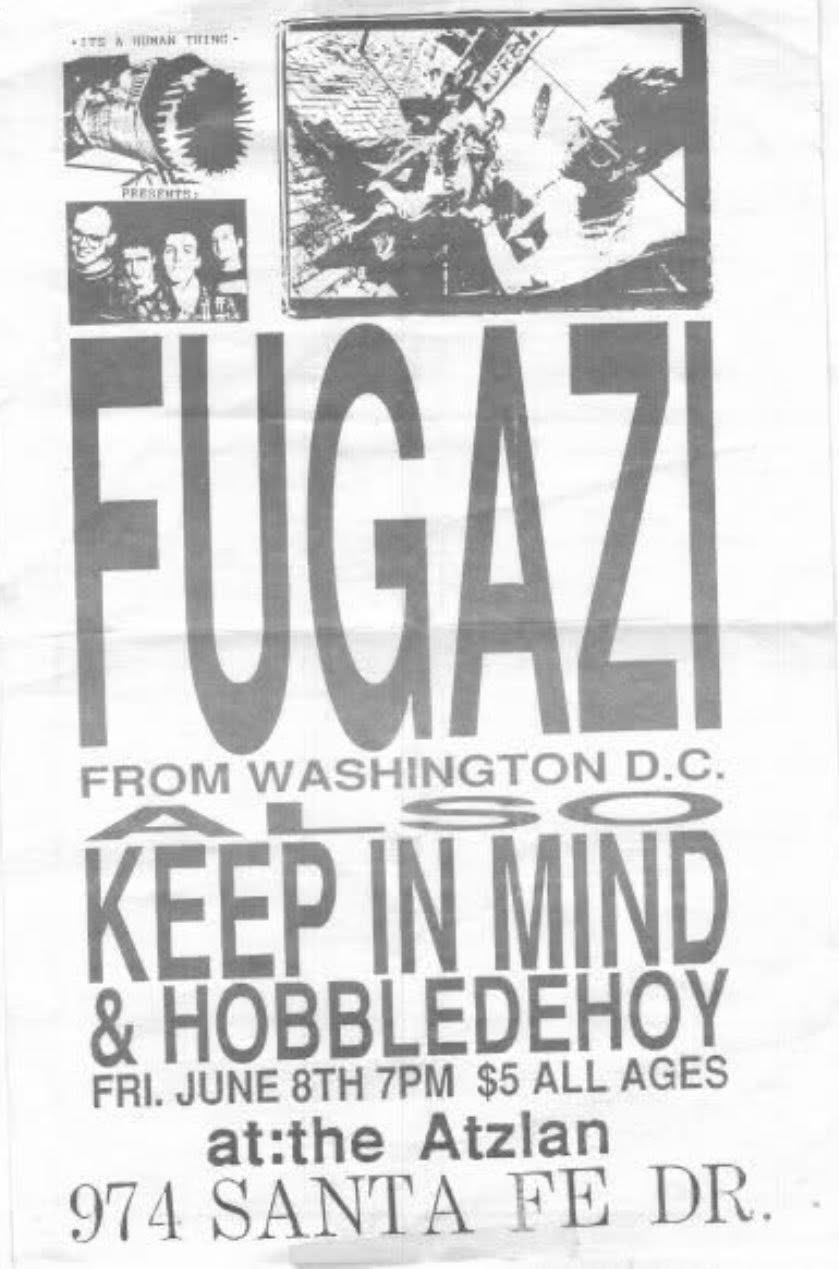
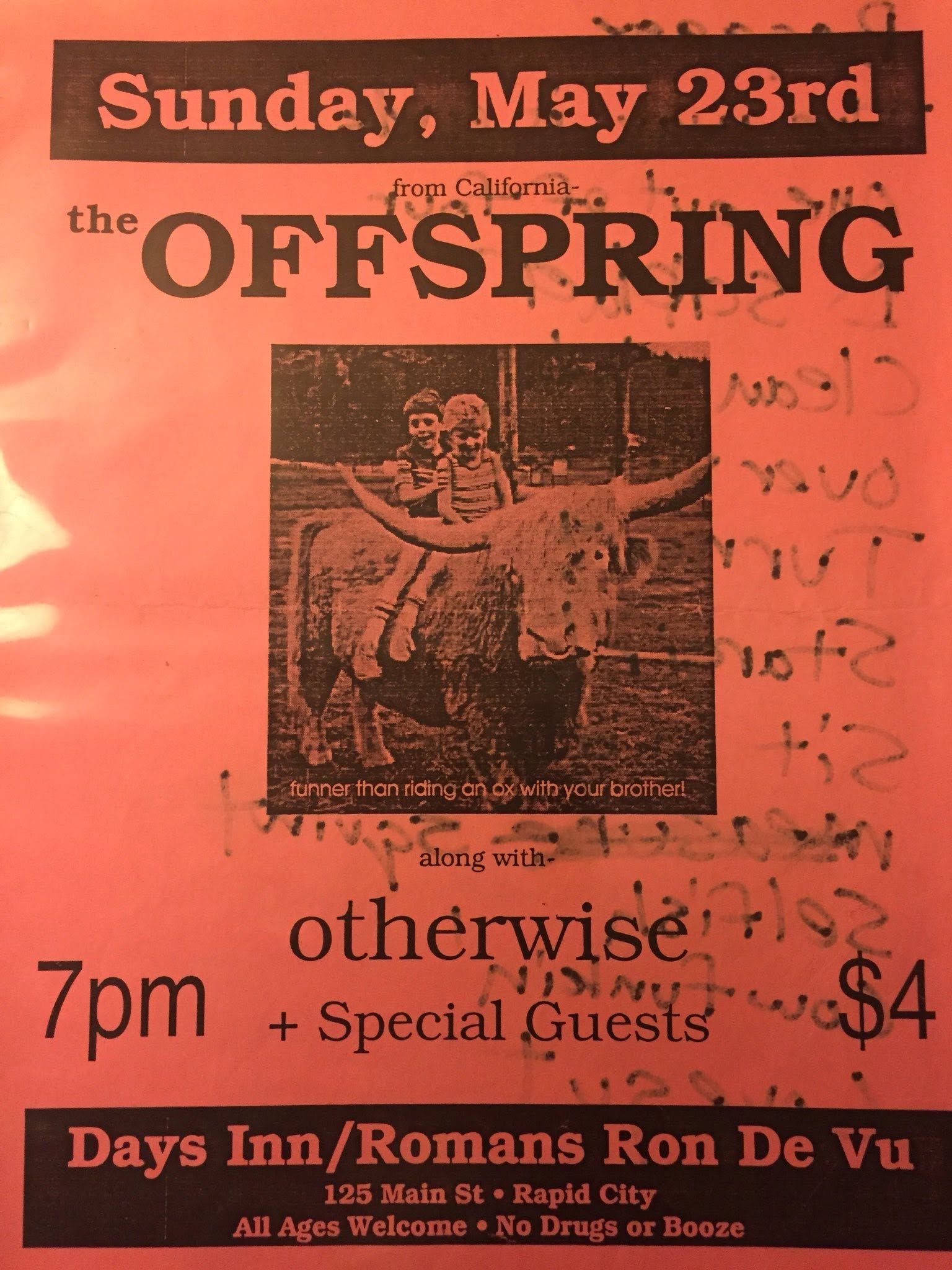


Walking into one of those shows didn’t feel like stepping into a polished concert. The rooms were usually dark, the music was loud, fast, and deliberately raw. Distorted guitars bounced off concrete walls while shouted vocals cut through the room and feedback ricocheted through the room. There was little separation between the audience and the band, if you stood near the front, your toes nearly touched the stage.
The music challenged authority, questioned convention, and gave people an outlet for frustration. People remember a scene that demanded integrity as much as individuality. While punk challenged authority and questioned convention, there was little patience for racism, bullying, or people who preyed on others. Respect wasn’t optional, it was part of the culture.
This weekend, former bandmates will share a stage together once again while audiences at the Dahl Arts Center watch the first chapter of a story that, until recently, had largely survived through, memories, old photographs, cassette tapes, and web archives.
Meanwhile, nearly forty years after that first show at the Knights of Columbus Hall, another generation is already writing the next chapter. Grassroots groups like the Rapid City Gutter Punks are doing the same work that has kept underground music alive in Rapid City for decades: creating opportunities instead of waiting for them, opening doors instead of guarding them, and carrying forward a culture built on creativity, integrity, and respect. It doesn’t look exactly like it did in 1986, and that’s precisely what Troy Zoller hoped for.
Know Before You Go
Rapid City Punk Rock Reunion
Location: 707 Nightlife, Rapid City
Dates: Thursday, Friday, and Saturday
Doors Open: 4:30 p.m. each day
Music Begins: 6 p.m.
Wristbands will be available at the door for those who haven’t pre-purchased. Wristbands allow re-entry throughout the evening. The venue will have two indoor bar stations, along with an outdoor bar area.
Estimated Set Times
Thursday
- Carrion Crawlers | 6:00–6:45 p.m.
- Continuum | 7:00–7:50 p.m.
- MothermayI | 8:00–9:00 p.m.
- Chesterfield | 9:15–10:00 p.m.
- Black Dots | 10:15–11:15 p.m.
Friday
- Diane Selwyn | 6:00–6:45 p.m.
- PX | 7:00–7:50 p.m.
- Red40 | 8:10–8:45 p.m.
- Kult of Indifference | 9:00–9:40 p.m.
- Dissent | 9:50–10:50 p.m.
- The Sophomore Effort | 11:00 p.m.–Midnight
Saturday
- Social Joke | 6:00–7:00 p.m.
- Buddies | 7:20–8:20 p.m.
- Clusterfux | 8:40–9:30 p.m.
- Arc Angles | 9:40–10:40 p.m.
- Log Jam | 11:00 p.m.–12:30 a.m.
Who the F** Wants to Play in Rapid City, SD?*, a documentary exploring the history of the Rapid City punk scene.
For Jack Batchelder, preserving those stories became its own DIY project. As a young teenager in the early 1990s, he watched people only a few years older than himself start bands, release their own records, promote concerts, and build opportunities without waiting for permission. The experience stayed with him. In 2016, he began interviewing members of the scene, eventually setting the project aside after a series of setbacks before returning to it this spring with a goal of premiering the first episode during reunion weekend.
“I’m not a professional filmmaker or documentarian, just someone who has been inspired by the community and DIY ethic of the Rapid City punk scene and believes these things deserve to be documented.” Batchelder says.
The first episode of Who the F** Wants to Play in Rapid City, SD?* introduces the story of the scene as a whole, while future installments will explore KTEQ, local venues, promoters, bands, and many of the people whose work happened away from the stage. Like the volunteers who preserved old recordings, saved handmade flyers, and built the Rapid City Punk Rock Archive, Batchelder sees documentation as another form of stewardship. If nobody records these stories, eventually they disappear.